Category:
C-Drama3 Reasons To Watch Romantic Chinese Melodrama Overdo
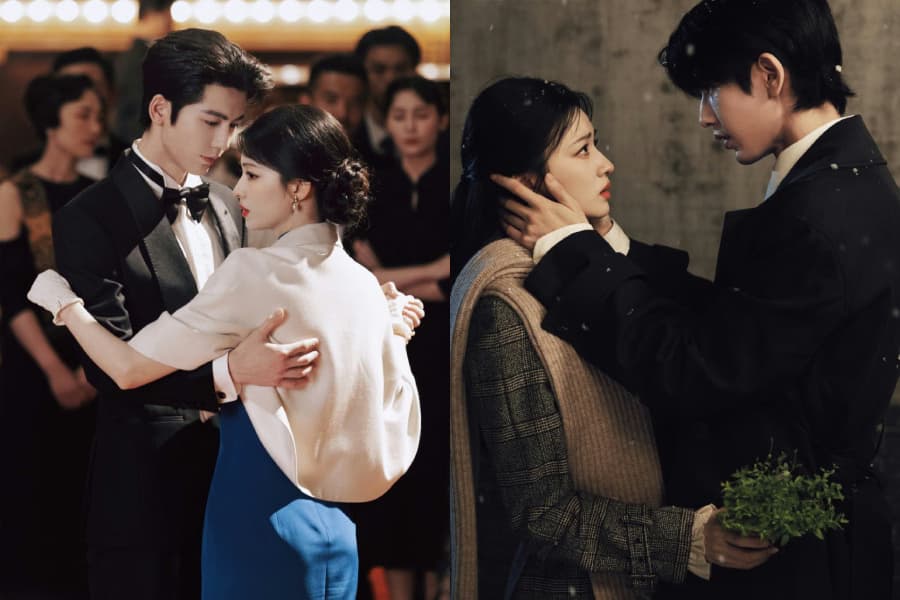
If you're a fan of emotionally intense romantic dramas with complex characters and high-stakes revenge plots, the Chinese melodrama "Overdo" deserves a spot on your watchlist. 🎬 This captivating C-drama has generated significant buzz in the Asian entertainment landscape, particularly among devoted followers of period romance stories and character-driven narratives. Despite receiving mixed critical reviews, the series delivers compelling storytelling moments that showcase why it continues to resonate with audiences seeking authentic emotional depth and intricate relationship dynamics.
The drama landscape has evolved considerably over the past few years, with Chinese productions increasingly competing with Korean dramas for international viewership. According to industry data, romantic C-dramas have seen a 40% increase in global streaming popularity since 2023, reflecting growing audience appetite for diverse Asian storytelling. "Overdo" represents this exciting shift, combining traditional melodramatic elements with modern production values and nuanced character development.
The Magnetic Charm of Zhang Ling He's Performance ✨
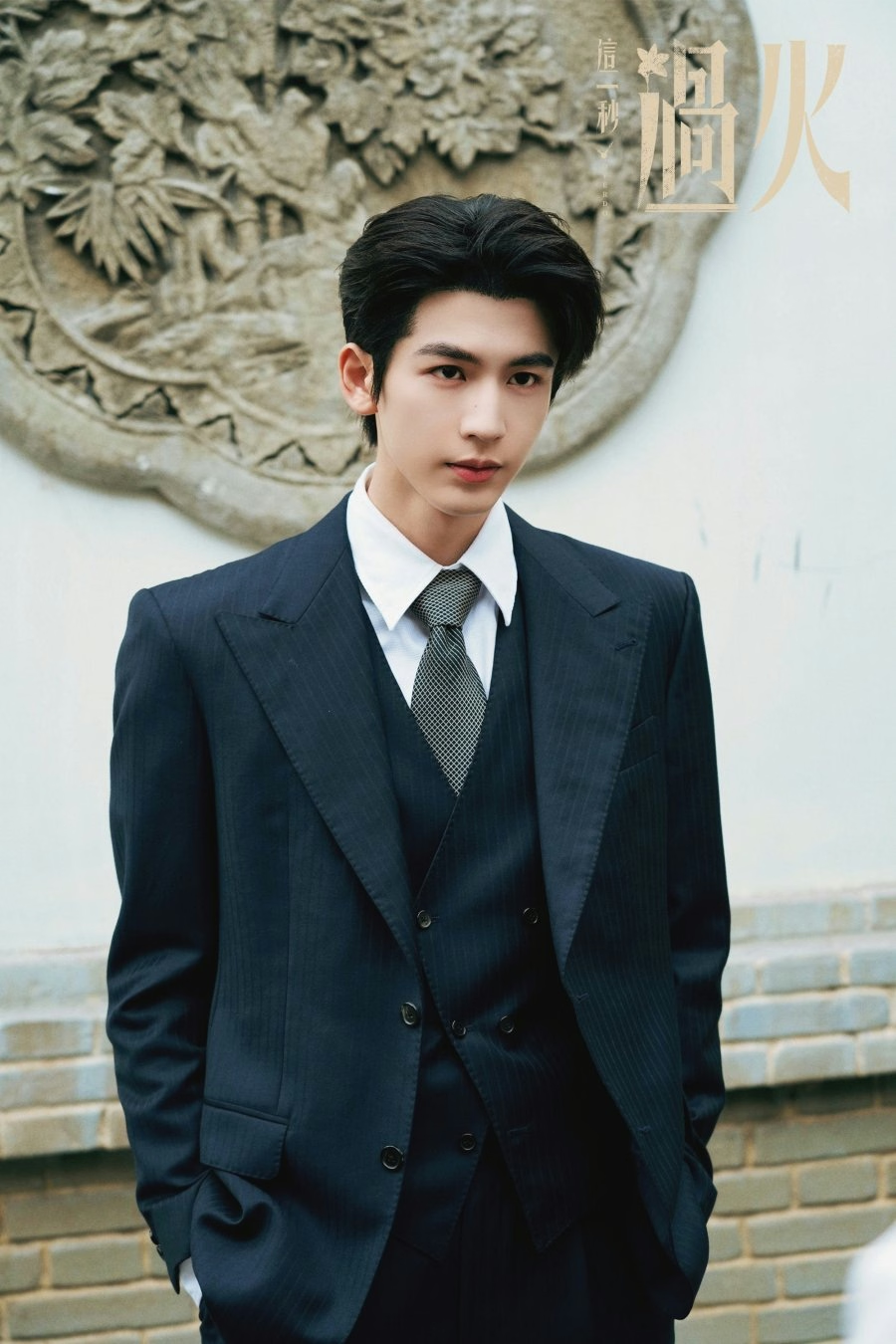
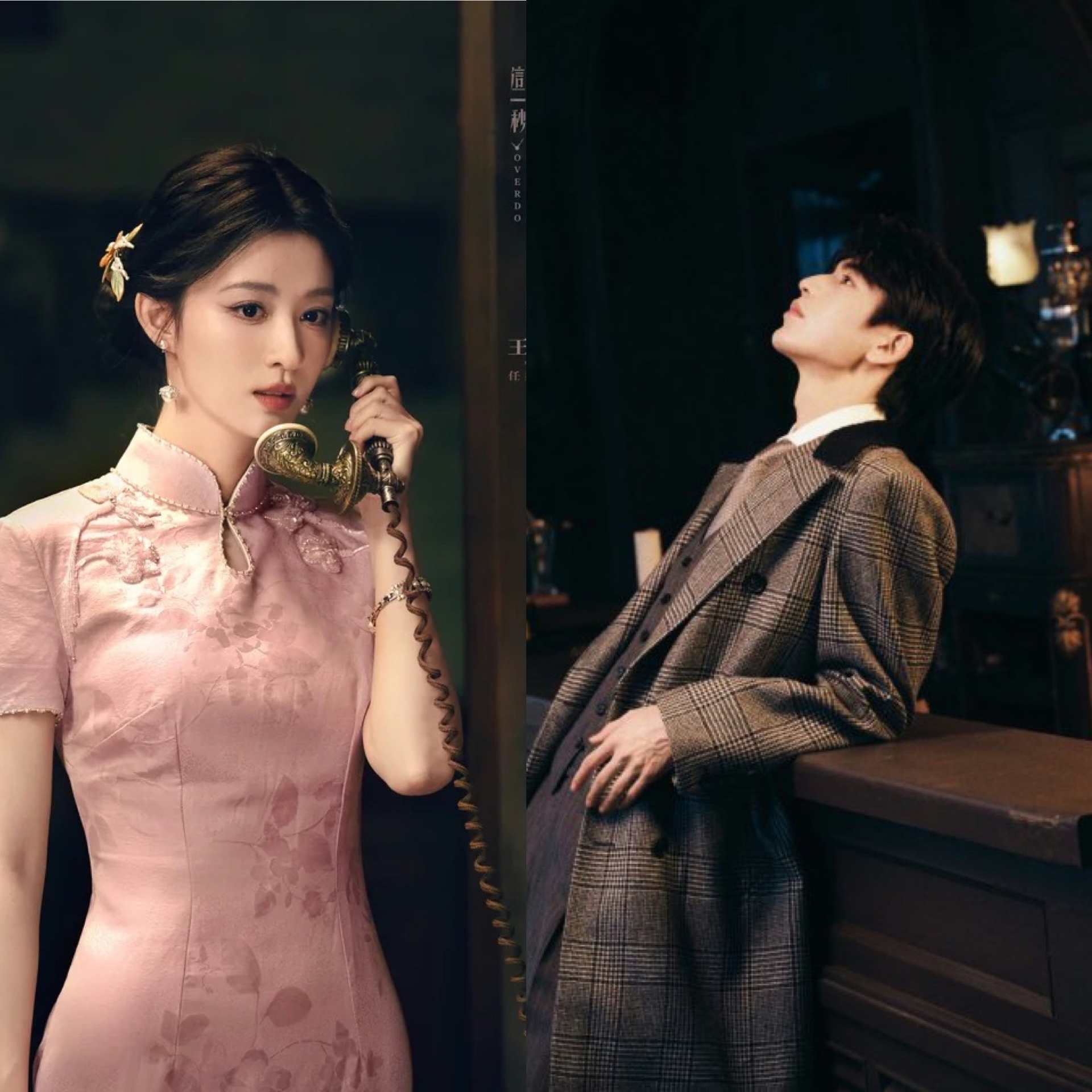
At the heart of "Overdo" lies Zhang Ling He's mesmerizing portrayal of Murong Qing Yi, a character whose journey from gentle physician to conflicted businessman forms the emotional backbone of the entire narrative. This performance marks a significant milestone in the actor's career, following his breakout success in the acclaimed period drama "Pursuit of Jade," which established him as one of dramaland's most compelling leading men. 🌟
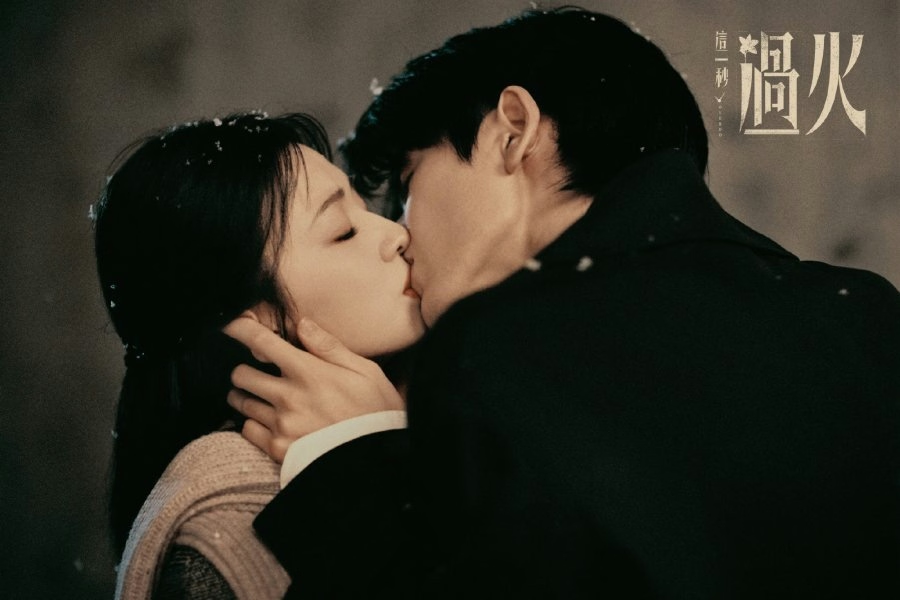
Qing Yi is not your typical romantic hero. His character arc spans multiple emotional territories, each requiring different acting approaches and emotional authenticity. The character begins as a compassionate doctor with a poetic soul—someone who expresses his feelings through heartfelt letters and finds joy in simple moments with his beloved. However, beneath this gentle exterior lies a deeply wounded individual shaped by years of family trauma and rejection.
The actor brilliantly captures Qing Yi's tragic backstory: a child caught in a switched-identity scenario who grows up in a household marked by physical torment and emotional deprivation. When he finally returns to his biological family, the Murongs, he faces cold indifference and outright hostility from his own mother, who irrationally blames him for his father's death. Only his older brother shows him consistent care, though even that relationship becomes strained by family dysfunction.
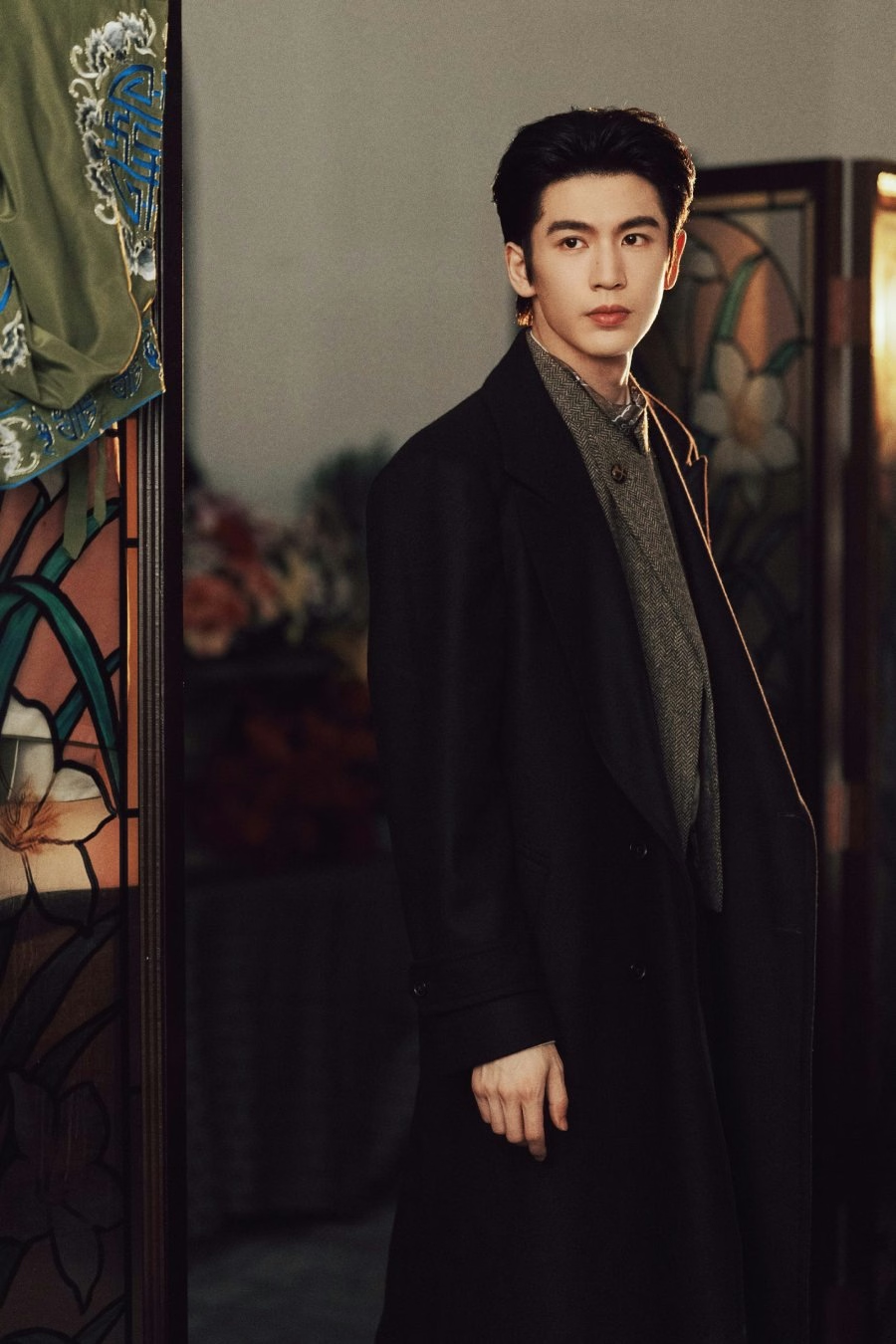
Zhang Ling He's interpretation transforms Qing Yi's subsequent transformation into something profoundly believable. After being falsely imprisoned for a crime he didn't commit and experiencing his lover's devastating betrayal, Qing Yi sheds his gentleness and emerges as an arrogant, sharp-tongued businessman. Yet the actor ensures audiences never lose sympathy for this character. Instead, his portrayal creates a compelling tension—we understand his rage, validate his thirst for revenge, and simultaneously recognize the wounded man beneath the bravado.
What makes Zhang Ling He's performance particularly exceptional is his ability to navigate the constant emotional push-and-pull that defines Qing Yi's relationship with his former lover. In one moment, he's plotting to expose her secrets and make her suffer for her betrayal; in the next, he's willing to sacrifice himself to protect her. This vulnerability, wrapped in layers of masculine pride and controlled fury, creates a character that feels remarkably human and relatable despite the melodramatic circumstances surrounding him.
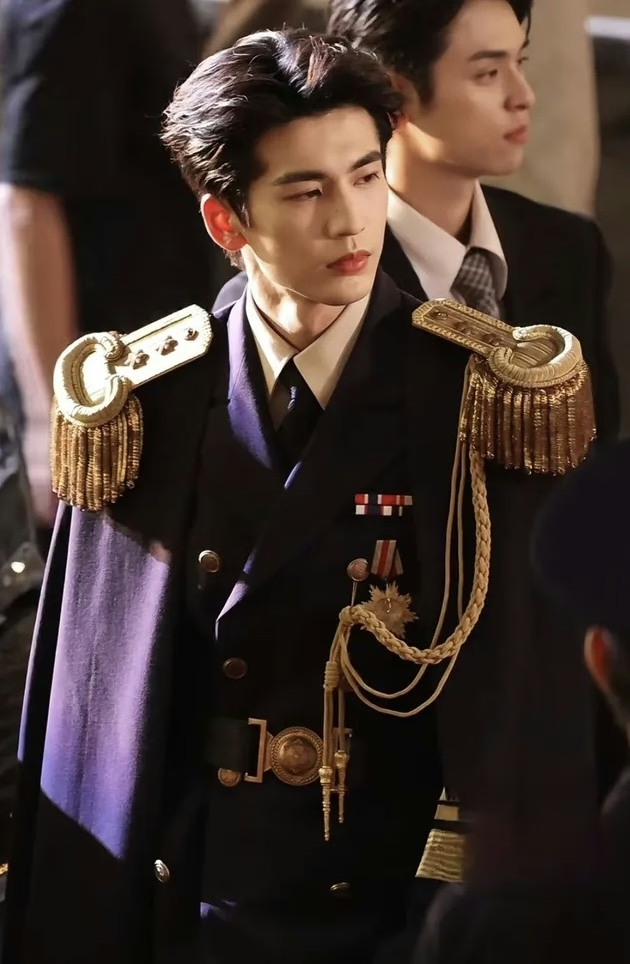
The actor's visual presentation enhances every scene he inhabits. His portrayal of the rakish businessman charm, the gentle physician's compassion, and the passionate lover's vulnerability all feel distinctly different, yet unmistakably the same character. Even when placed in absurd or contrived situations—a common pitfall in melodramatic storytelling—Zhang Ling He's grounded performance makes these moments feel earned and authentic.
Wang Chu Ran's Fierce and Complex Female Lead 🔥
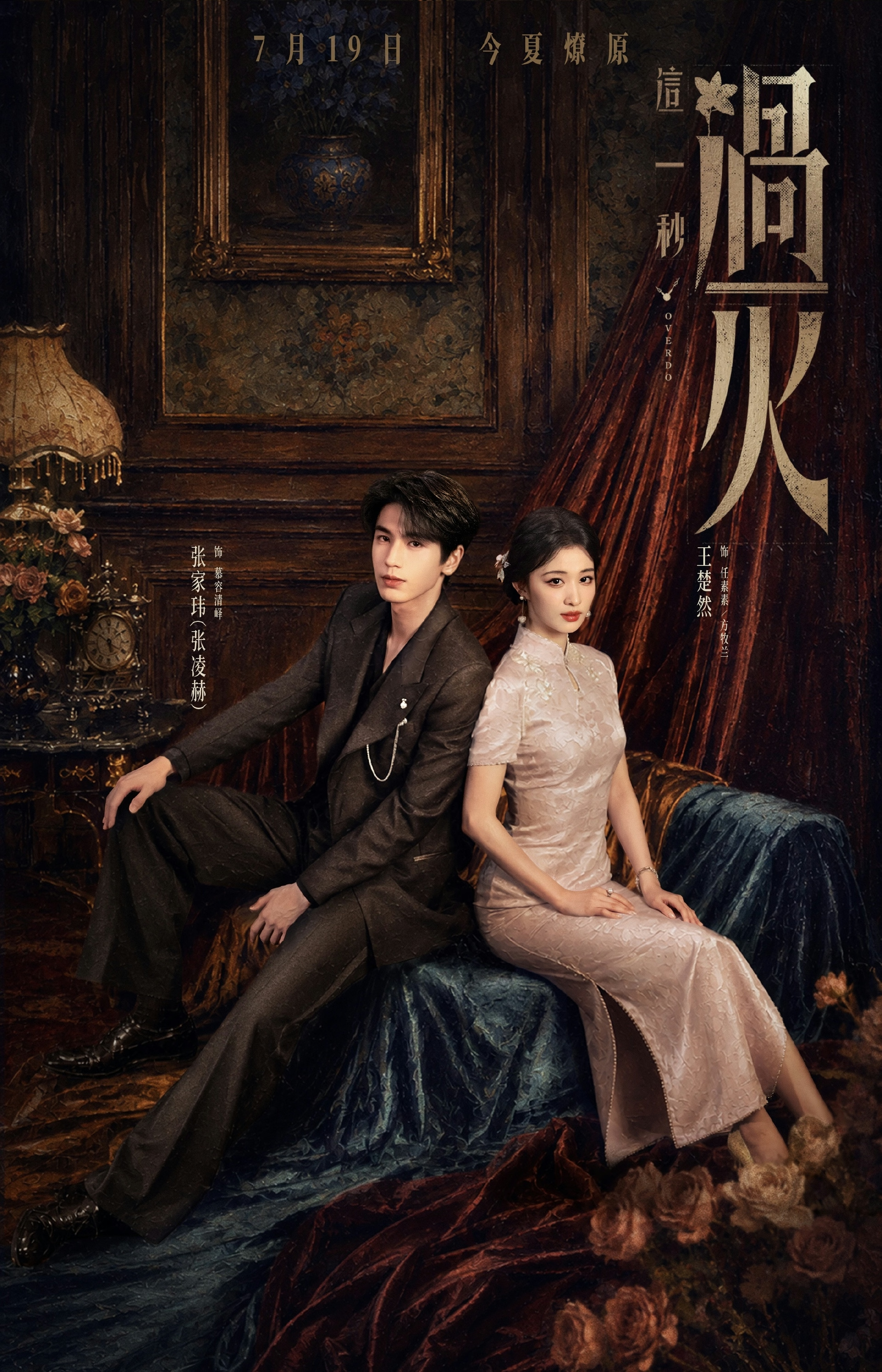
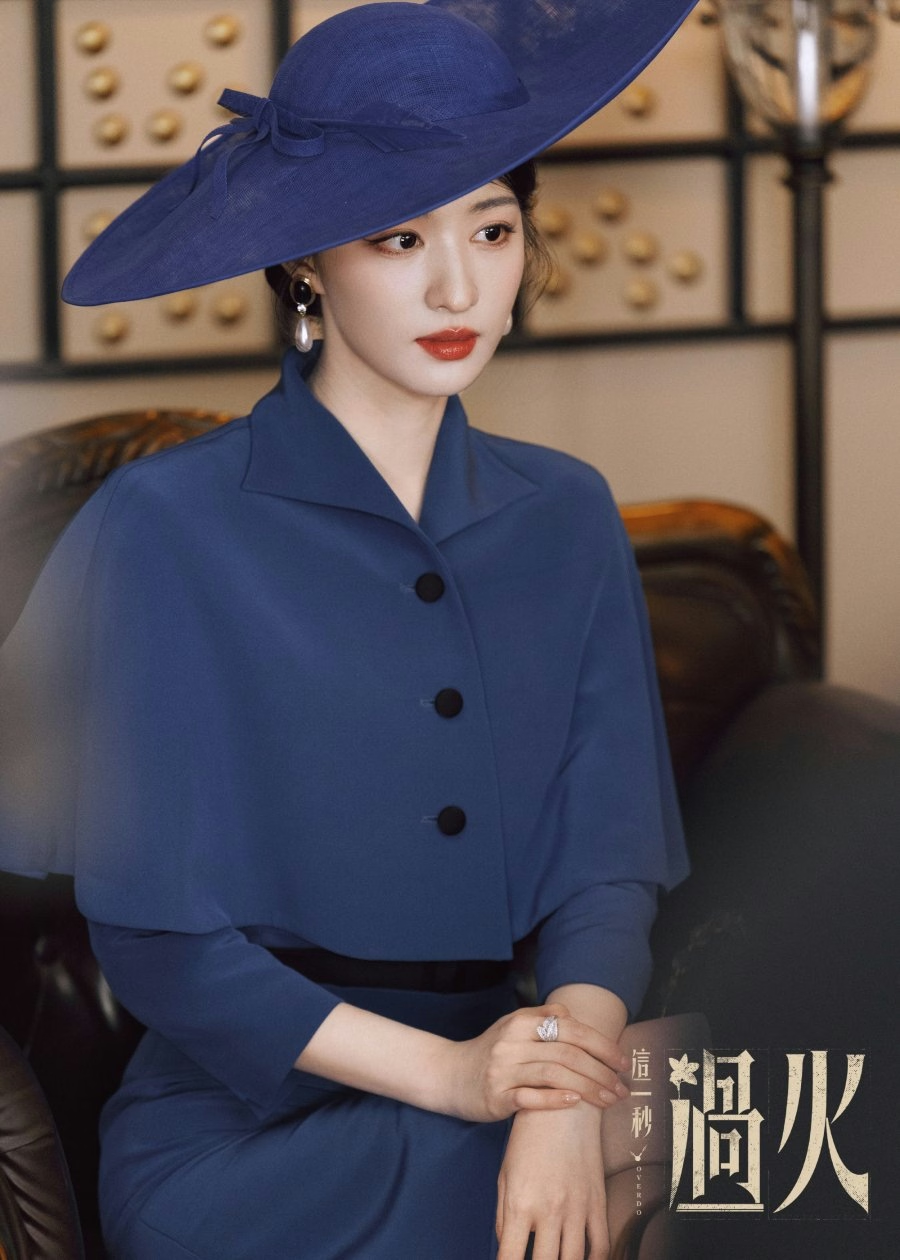
While Zhang Ling He anchors the emotional landscape, Wang Chu Ran provides the narrative propulsion as Ren Su Su, a woman whose commitment to justice transforms her into a formidable force of vengeance. This marks the first collaboration between these two leads, and their on-screen chemistry quickly became a talking point among fans and critics alike. The pairing generated significant anticipation during promotional campaigns, with audiences immediately invested in their dynamic.
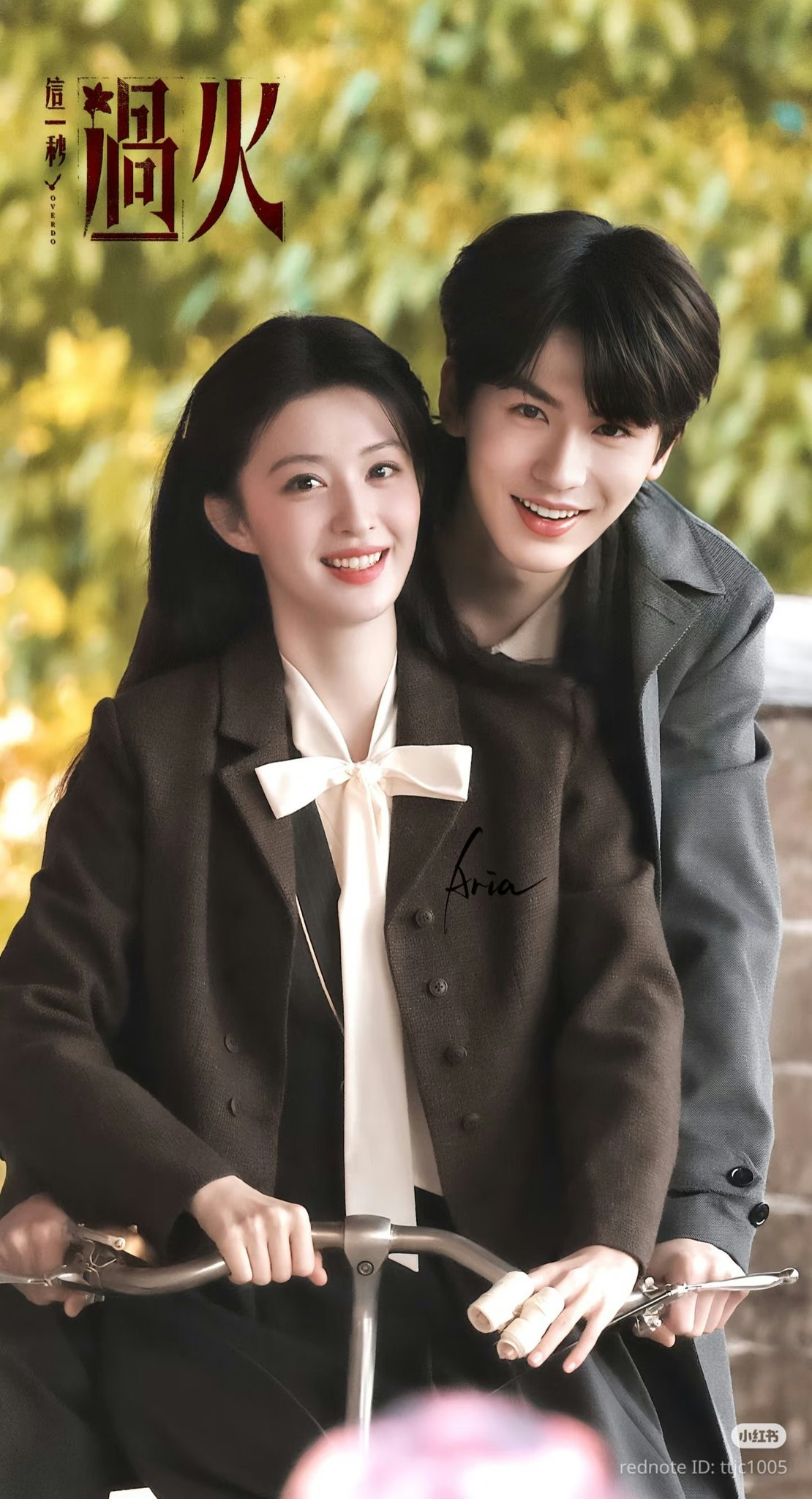
Su Su's character represents a different kind of strength than traditionally portrayed in romantic dramas. She's not a passive heroine waiting for rescue or validation from her love interest. Instead, she's a woman driven by a mission that supersedes personal desires and emotional connections. Her backstory reveals the depth of her motivation: she and numerous other young women were subjected to horrific abuse, trafficking, and exploitation within an orphanage controlled by the Huo family.
This trauma transforms into purpose. Su Su becomes the leader of a sisterhood dedicated to avenging the wrongs committed against them. When she unexpectedly falls in love with Qing Yi, she faces an unprecedented internal conflict—for the first time, personal feeling threatens to derail her mission. However, her commitment to justice proves stronger than romantic attachment, leading her to abandon Qing Yi and return to the Murong household under an assumed identity as Feng Mu Lan, daughter of a shipping magnate.
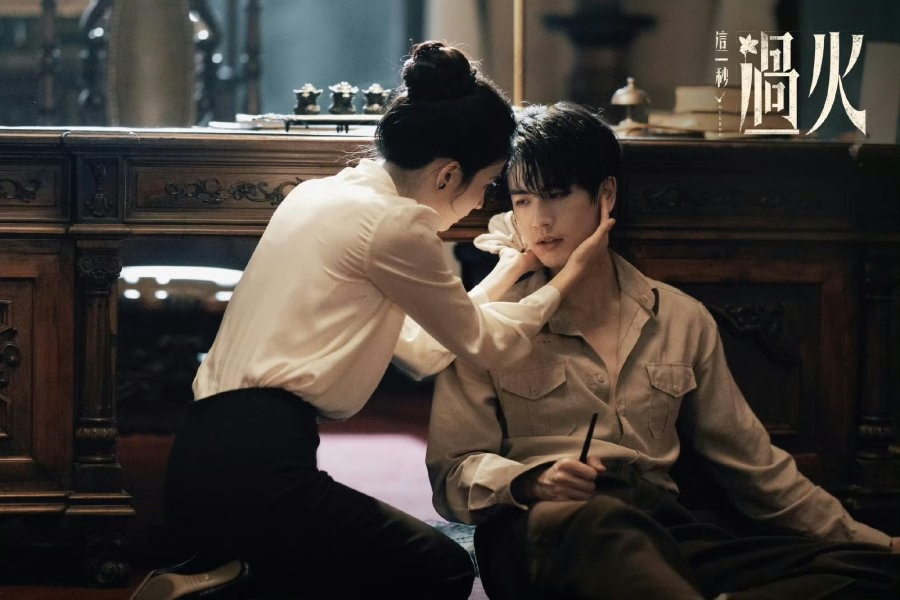
Wang Chu Ran's portrayal of this character requires remarkable emotional control. She must project coldness and shrewd calculation while occasionally revealing the woman beneath the mask—someone capable of love but unwilling to compromise her principles for it. The actress navigates this duality with impressive finesse, creating moments where viewers glimpse Su Su's internal struggle before she reasserts her emotional armor.
The character's complexity extends to her moral ambiguity. She's not a villain seeking revenge for petty reasons; she's a survivor fighting for justice. Yet her methods involve manipulation, deception, and potentially putting innocent people at risk. Wang Chu Ran captures this moral gray area beautifully, making audiences sympathize with Su Su's cause while questioning her tactics.
A Narrative That Explores Love, Betrayal, and Revenge 💔
Beyond the individual performances, "Overdo" succeeds in crafting a narrative framework that explores the intersection of love, betrayal, and revenge in ways that feel both familiar and fresh within the melodrama genre. The drama's central conflict—two lovers separated by tragedy, only to be reunited under circumstances that pit them against each other—provides endless dramatic potential.
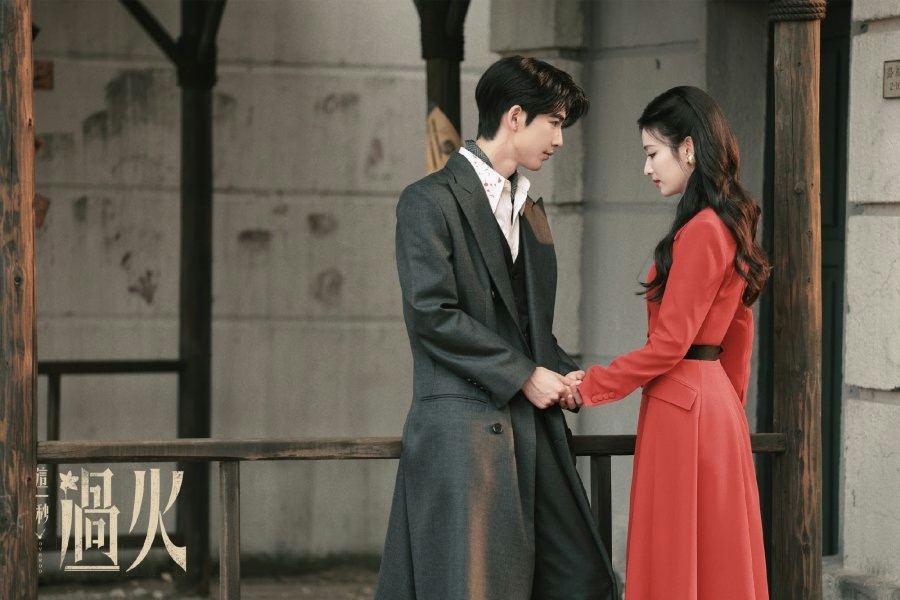
The premise itself hooks viewers immediately: Qing Yi, a doctor from an influential Republican-era Shanghai family, finds his life destroyed when he's falsely accused of a crime and imprisoned. His lover, Ren Su Su, is believed dead. When he's forced into a politically advantageous marriage with the hot-tempered daughter of the rival Huo family, it seems his romantic chapter has permanently closed.
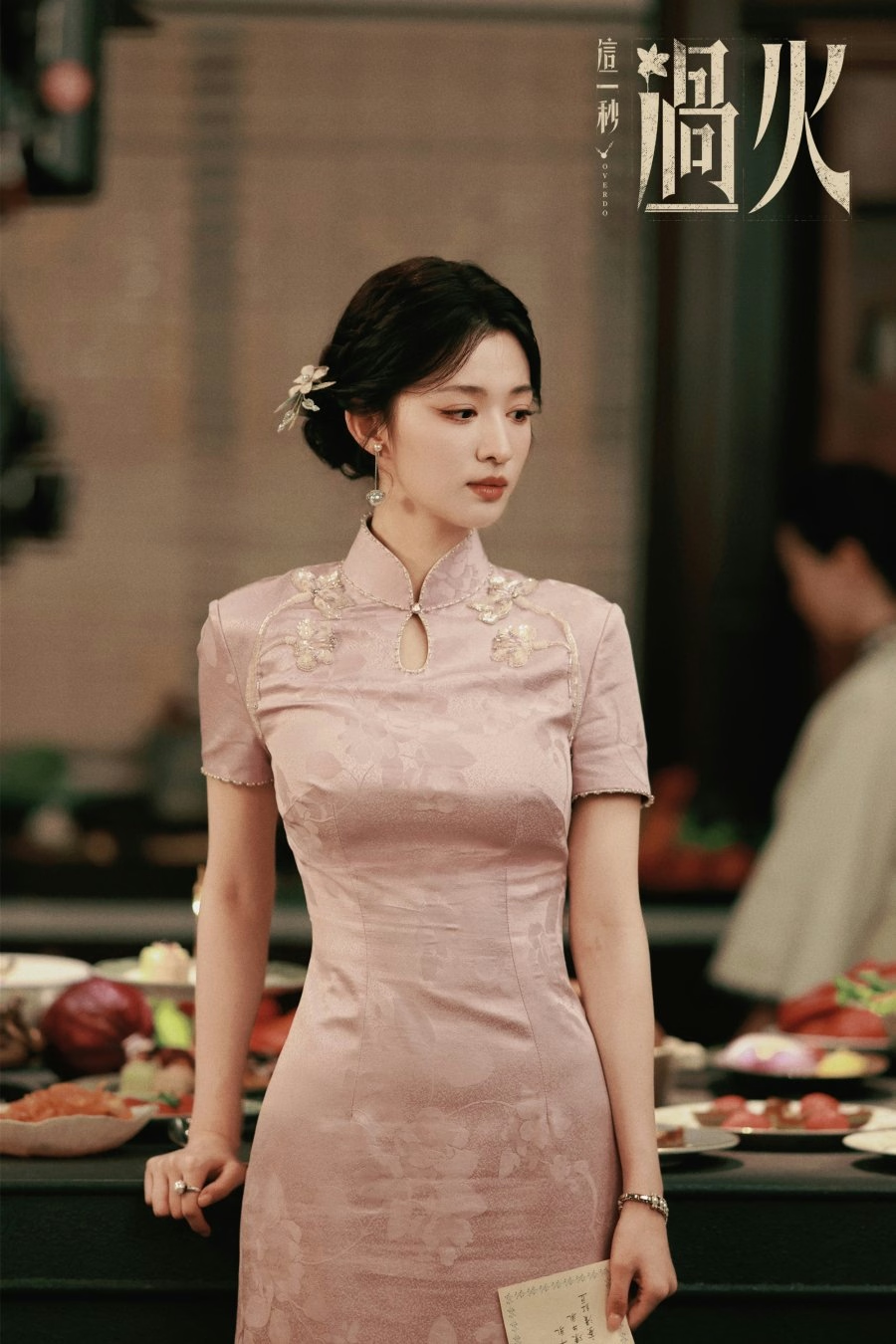
Then Su Su reappears—three years later, alive, transformed, and engaged to Qing Yi's own brother. The shock and betrayal Qing Yi experiences is visceral. Su Su coldly informs him that he was merely a stepping stone in her larger plan, and now that she no longer needs him, she's moved on to his brother as part of her revenge scheme. This revelation shatters whatever hope Qing Yi might have harbored for reconciliation.
What follows is a "chaotic tango," as some describe it, where love, rage, and revenge interweave into something neither character can fully control or predict. The drama's strength lies in its refusal to present clear villains and heroes. Both characters have legitimate grievances; both have valid reasons for their actions; both are simultaneously victims and perpetrators of harm.
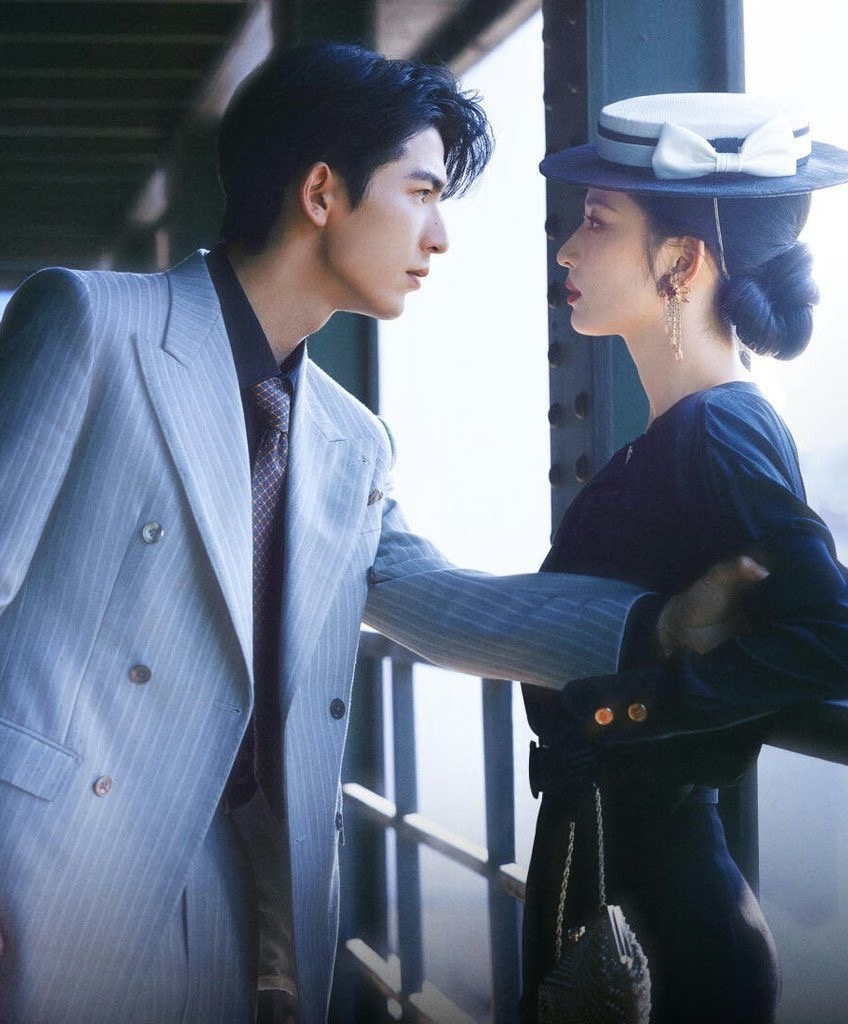
This moral complexity elevates "Overdo" beyond standard melodrama fare. Rather than presenting revenge as a straightforward path to justice, the drama explores how vengeance corrupts, how betrayal lingers, and how love persists even when logic suggests it shouldn't. The narrative asks difficult questions: Can love survive betrayal? Does the end justify the means? What happens when two people's quests for justice put them in opposition?
The Republican-era Shanghai setting adds historical texture and cultural specificity that enriches the storytelling. This period represents a turbulent time in Chinese history, marked by political intrigue, family power dynamics, and the collision of traditional and modern values. The warlord families, shipping magnates, and business rivalries feel grounded in historical reality rather than pure fantasy.
The Chemistry That Ignites the Screen 🎭
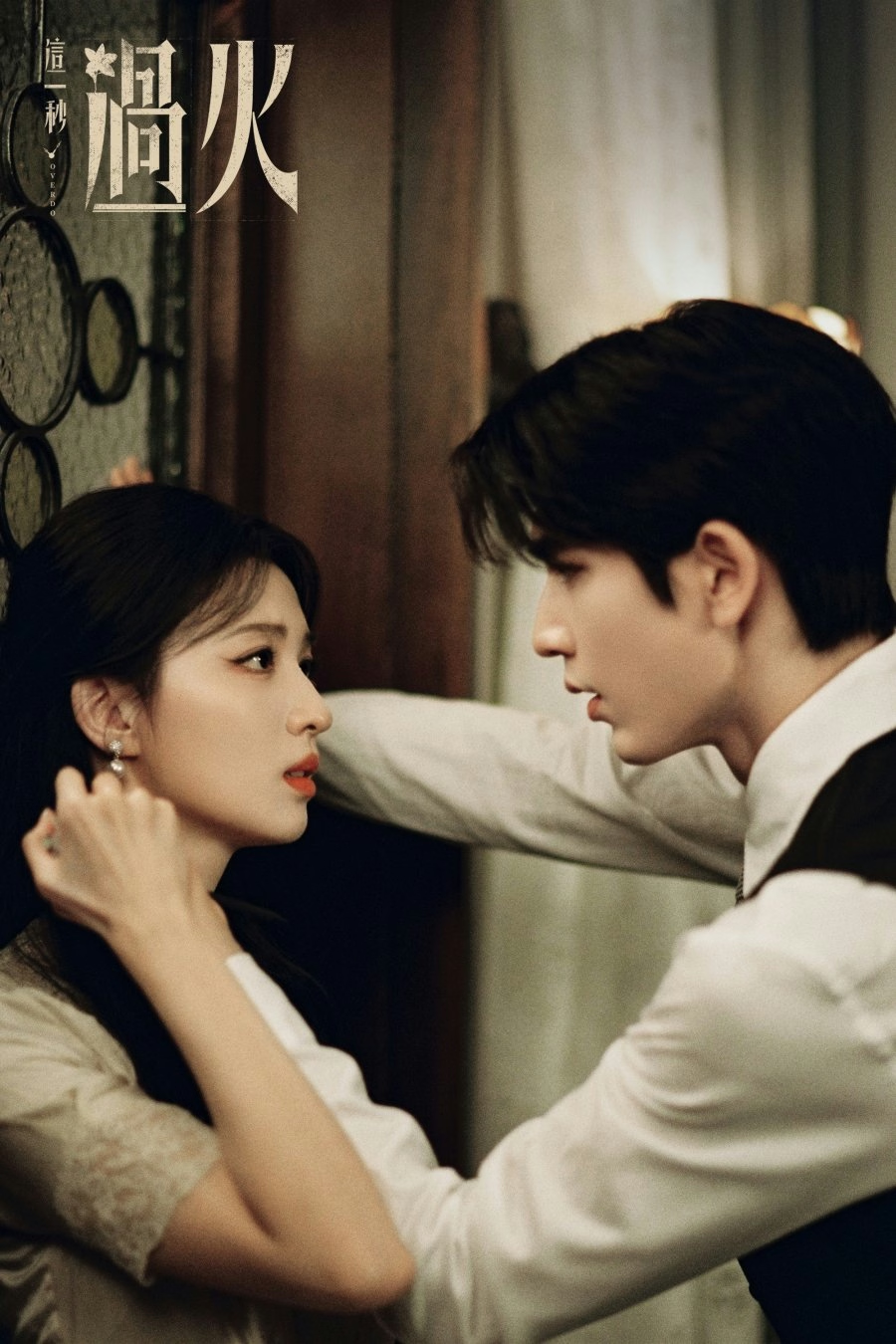
Beyond individual performances and narrative structure, the palpable chemistry between Zhang Ling He and Wang Chu Ran provides the dramatic fuel that keeps viewers engaged. Their first collaboration generated considerable anticipation, and the on-screen pairing delivers on that promise in unexpected ways. The chemistry isn't limited to romantic moments; it's most compelling during scenes of confrontation and emotional conflict.
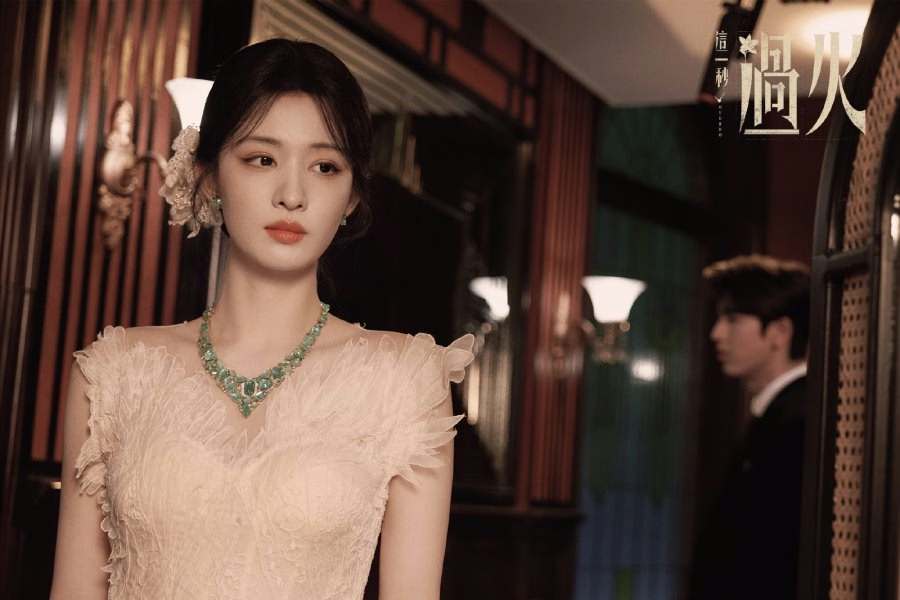
When Qing Yi and Su Su/Mu Lan encounter each other after years of separation, the air crackles with unresolved feelings, anger, confusion, and lingering desire. Their scenes together pulse with intensity—whether they're engaged in heated arguments, stolen glances filled with longing, or moments of vulnerable honesty. This chemistry makes their relationship feel simultaneously toxic and irresistible, reflecting the drama's central theme that love and revenge often dance dangerously close together.
Why This Drama Deserves Your Attention 🌟
While "Overdo" isn't without flaws—critics have noted narrative inconsistencies and occasional continuity lapses—the drama transcends its technical shortcomings through the sheer force of its performances and emotional authenticity. The character work from both leads creates investment that carries viewers through weaker plot moments.
For fans of character-driven narratives, this C-drama offers:
- Complex protagonists with genuine moral ambiguity rather than clear-cut heroes and villains
- Nuanced performances that showcase emotional range and vulnerability
- Historical setting that adds depth and cultural specificity
- Themes of revenge and redemption explored with surprising sophistication
- Chemistry between leads that makes their complicated relationship feel earned and compelling
Final Thoughts: A Drama Worth Exploring 💫
"Overdo" represents the current evolution of Chinese melodrama—a genre that continues to mature and sophisticate its storytelling approaches. While it may not achieve perfection, it succeeds in creating characters worth caring about and situations worth investing in emotionally.
If you appreciate romantic C-dramas that prioritize character development over plot convenience, that explore moral gray areas rather than presenting simplistic good-versus-evil narratives, and that showcase compelling performances from talented actors, "Overdo" deserves a spot on your watchlist. The drama's exploration of how love and revenge intersect, how trauma shapes our choices, and how forgiveness sometimes requires confronting our deepest wounds makes it relevant beyond its melodramatic framework.
The landscape of Asian entertainment continues to expand and diversify, with Chinese productions increasingly claiming their place alongside Korean dramas in international consciousness. "Overdo" exemplifies this trend—a series that demonstrates the depth, sophistication, and emotional resonance that C-dramas can achieve when given the right creative vision, talented cast, and willingness to explore complex human relationships.
Whether you're a longtime fan of Chinese melodramas or someone curious about expanding your Asian drama horizons, "Overdo" offers compelling reasons to invest your time. The performances alone make it worth experiencing, but the narrative framework and thematic exploration of love, betrayal, and revenge provide substance beneath the melodramatic surface. 🎬✨