Category:
BollywoodBatwara 1947 Review: Sunny Deol & Shabana Azmi Shine
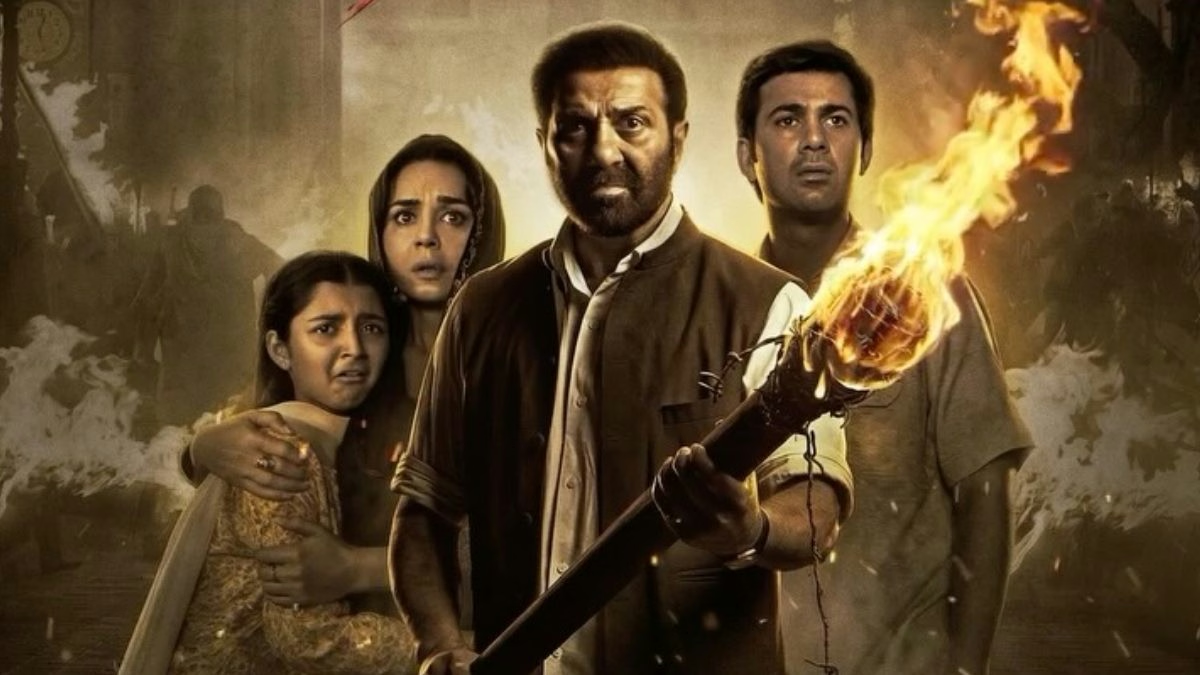
Partition Drama Strikes Gold: Sunny Deol's Triumphant Return 🎬
After dominating the box office three years ago with Gadar 2, Sunny Deol has made his grand comeback just in time for the Independence Day weekend. This time, he's stepping into the complex, emotionally charged world of the 1947 Partition with Batwara 1947, a film that's already generating serious buzz among cinema enthusiasts and casual moviegoers alike.
Directed by veteran filmmaker Rajkumar Santoshi, this partition drama is based on Asghar Wajahat's acclaimed novel Jis Lahore Nai Dekhya O Jamyai Nai. What makes this release particularly significant is that it marks Preity Zinta's return to Hindi cinema after a considerable hiatus, alongside the powerhouse presence of Shabana Azmi.
Netizens Celebrate a Nuanced Partition Narrative ✨
The early audience reception has been overwhelmingly positive, with social media buzzing with praise for the film's sensitive handling of one of India's most traumatic historical moments. What's particularly striking is how viewers are responding not just to the spectacle, but to the emotional depth and character-driven storytelling.
One of the most compelling aspects that audiences are highlighting is how the film avoids the typical pitfalls of partition dramas. Rather than relying on jingoistic nationalism or over-the-top melodrama, Santoshi has crafted a narrative centered on ordinary people experiencing extraordinary circumstances. The displacement, loss, and communal upheaval of 1947 emerge through intimate character moments rather than grand gestures.
Sunny Deol's Subdued Brilliance: Breaking the Mold 🌟
What's fascinating about the audience response is that viewers are praising Sunny Deol precisely for not delivering his typical larger-than-life action hero persona. Instead, he's bringing a more restrained, emotionally nuanced performance that showcases his range as an actor.
Many viewers have noted that while they came expecting the powerful, commanding presence Deol is famous for, they left thinking about the quieter moments. His portrayal of Sikandar—a character who isn't presented as a moral paragon from frame one—reveals layers of vulnerability and introspection. The scene where Sikandar gradually begins to see an older woman as a maternal figure has particularly resonated, with audiences noting how Deol's eyes convey more emotion than words ever could.
This character arc is brilliantly constructed. Sikandar begins as a flawed, sometimes frustrating protagonist with his own prejudices and anger. As the narrative progresses and the partition announcement reshapes everyone's reality, he's forced to confront his own biases. By the climax, viewers find themselves completely invested in his transformation—a testament to both the writing and Deol's understated performance.
Shabana Azmi: The Emotional Backbone 💫
If Sunny Deol is the narrative's anchor, Shabana Azmi is undoubtedly its soul. The veteran actress delivers what many are calling a heart-wrenching, career-defining performance. Her portrayal of a woman navigating the devastation of partition brings a gravitas and authenticity that elevates the entire film.
Audience members have consistently highlighted how Azmi's performance lingers long after the credits roll. Her character embodies the silent suffering of countless women whose lives were irreversibly altered by the events of 1947. The nuance she brings to every scene—from moments of quiet desperation to flashes of maternal tenderness—demonstrates why she remains one of Indian cinema's most respected actors.
Preity Zinta's Graceful Comeback 🎭
Preity Zinta's return to Hindi cinema after years away has been warmly received by audiences. Rather than attempting a dramatic comeback vehicle, she's chosen to be part of an ensemble cast in a meaningful film. Her presence adds another layer of emotional depth to the narrative, and viewers appreciate the grace with which she's reintegrated into the industry.
The supporting cast, including Karan Deol, also receives praise for their committed performances. In a film like this, where every character carries the weight of historical tragedy, ensemble strength becomes crucial.
The Writing: Complexity Over Convenience 🖋️
One of the most intelligent aspects of Batwara 1947 that audiences are celebrating is its refusal to present characters as morally perfect. The screenplay doesn't shy away from showing how fear, displacement, and insecurity drive people to make questionable choices.
This complexity is refreshing. Rather than painting one side as villainous and another as heroic, the film explores how ordinary people respond to extraordinary circumstances. Characters frustrate viewers initially—and that's intentional. As their circumstances become clearer and their motivations more understandable, the audience's judgment shifts. This is sophisticated character writing that respects viewer intelligence.
The first half, while methodical in its pacing, establishes these character foundations. Once the partition is announced, the narrative gains tremendous momentum. The railway station sequence, in particular, has been singled out as especially powerful—a moment that encapsulates the human tragedy of displacement.
Box Office Implications and Industry Context 📊
With Gadar 2 having proven that Sunny Deol remains a significant draw during holiday weekends, Batwara 1947 arrives with considerable expectations. The film's quality and audience reception suggest it could replicate that success, though partition dramas typically appeal to a more discerning audience than action-packed mass entertainers.
In the broader context of Indian cinema, the success of character-driven historical dramas like this one signals an audience appetite for substantive storytelling. The market isn't just seeking spectacle; viewers are hungry for films that engage them emotionally and intellectually.
What Sets This Partition Drama Apart 🔍
Partition has been explored in Indian cinema multiple times, from Hey Ram to Khuda Kay Liye, but each film brings its own perspective. What distinguishes Batwara 1947 is its focus on humanity amid hatred. Rather than positioning partition as a political event, Santoshi frames it as a personal tragedy for millions.
The film's refusal to offer easy answers or comfortable narratives is another strength. There's no magical resolution where everyone learns to love each other. Instead, there's the messy, painful process of people trying to survive and occasionally finding moments of grace amid catastrophe.
The Emotional Residue That Lingers 💔
Many viewers have expressed surprise at how the film stays with them long after leaving the theater. They expected a Sunny Deol action spectacle but found themselves contemplating the quieter character moments for hours afterward.
This is the hallmark of meaningful cinema—when a film transcends entertainment and becomes something you carry with you. The scenes that viewers keep replaying in their minds aren't the action sequences; they're the intimate moments of connection, loss, and tentative hope.
A Masterclass in Restrained Performance 🎪
For anyone interested in acting craft, Batwara 1947 offers a masterclass in how to convey profound emotion through subtlety. Sunny Deol's willingness to strip away his trademark intensity and work with smaller gestures demonstrates genuine artistic growth.
This isn't the loud, dominating presence audiences know from his action films. Instead, it's a measured, thoughtful interpretation of a man grappling with his own limitations and prejudices. The performance dominates not through volume but through depth.
Why This Film Matters Right Now 🌍
In an era where historical narratives are increasingly contested and politicized, Batwara 1947 arrives as a reminder of cinema's power to humanize history. By focusing on individual stories rather than grand historical sweeps, the film makes partition personal and immediate.
The film also arrives at a moment when many Indian viewers are seeking more sophisticated storytelling. After years of franchises and formulaic entertainers, audiences are responding enthusiastically to films that challenge them emotionally and intellectually.
Final Verdict: A Film That Resonates 🏆
Batwara 1947 represents a significant achievement for everyone involved. Rajkumar Santoshi has crafted a partition drama that avoids clichés while remaining deeply moving. Sunny Deol has demonstrated that his acting range extends far beyond his action hero persona. Shabana Azmi has delivered a performance of profound emotional depth.
For cinema lovers seeking meaningful storytelling, this is essential viewing. For Sunny Deol fans, it's a revelation. For anyone interested in how Indian cinema can tackle historical trauma with nuance and sensitivity, Batwara 1947 offers compelling evidence of the medium's potential.
The film proves that partition dramas don't need to be loud or didactic to be powerful. Sometimes, the most devastating emotional impact comes from quiet moments, restrained performances, and stories that trust audiences to understand the complexity of human nature.
You May Also Like

Bollywood
T-Series Pan-India Strategy: How Bhushan Kumar Is Redefining Indian Cinema
September 2, 2026
Bollywood
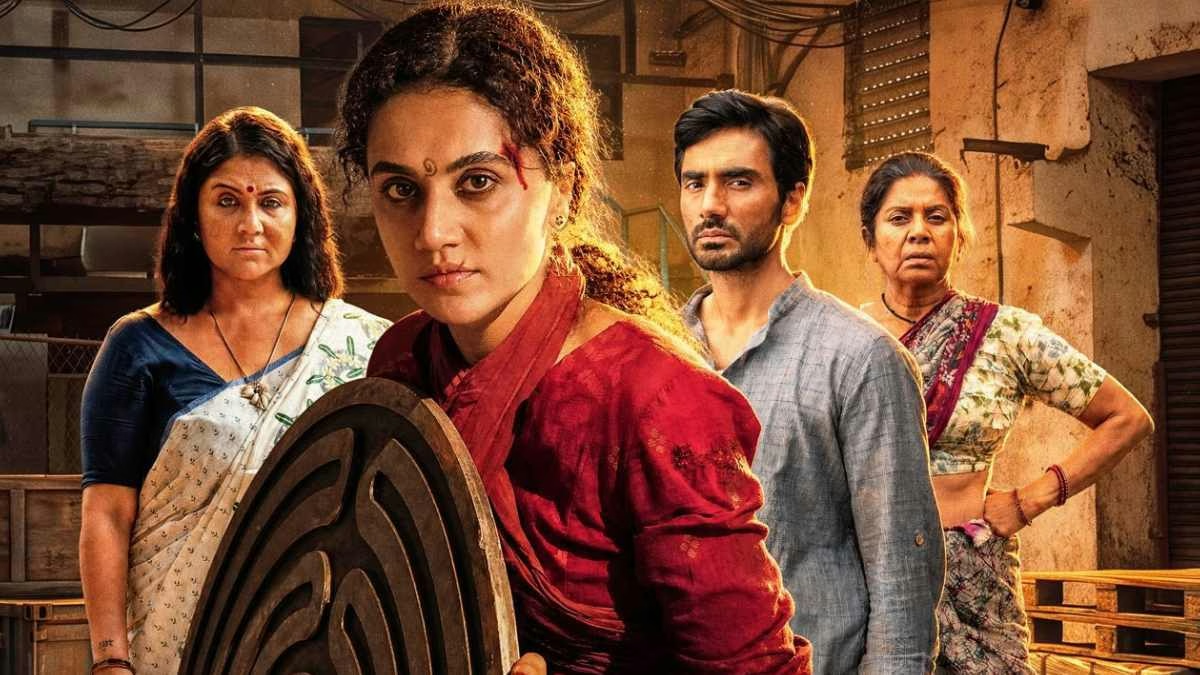
Gandhari Trailer Review: Taapsee Pannu's Fierce Mother
September 1, 2026
Bollywood
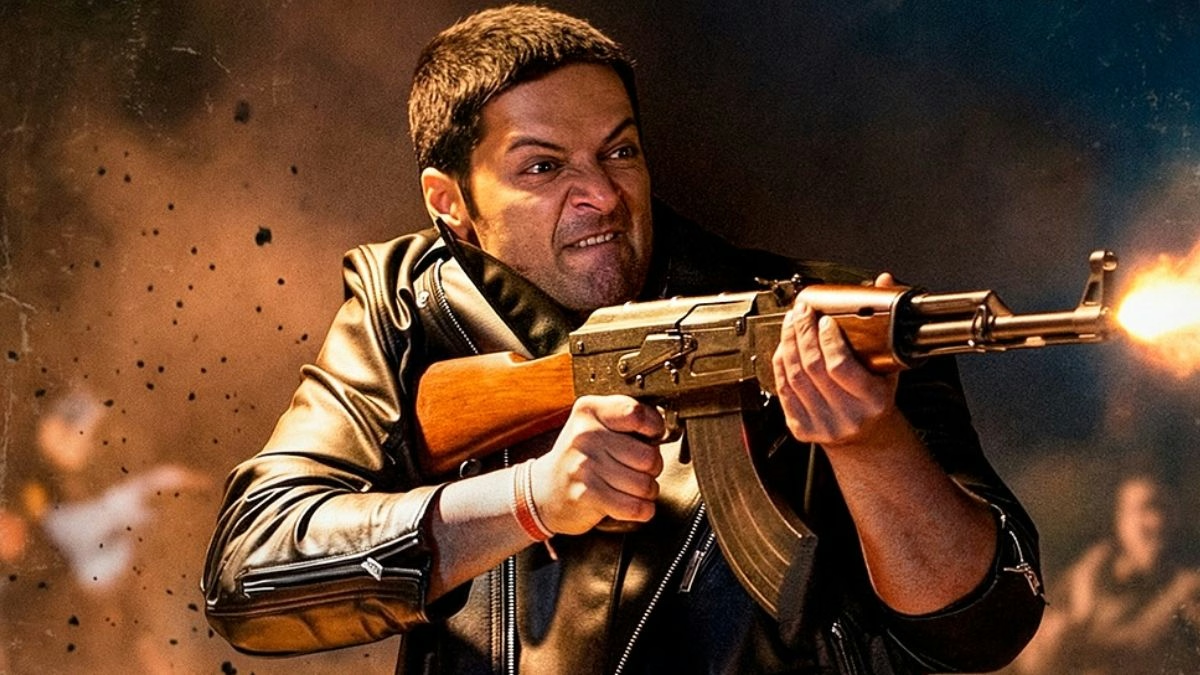
Ali Fazal Reveals Where Mirzapur: The Movie Picks Up
September 1, 2026
Bollywood
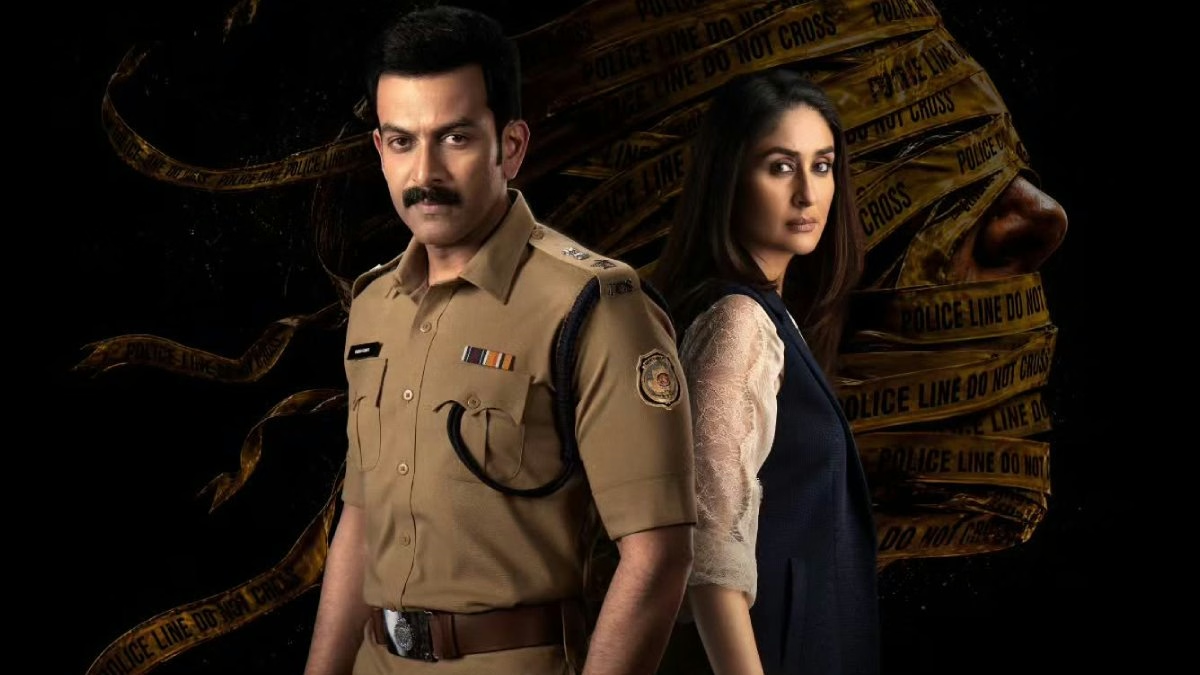
Daayra Poster Reveals Kareena & Prithviraj's Intense Showdown
September 1, 2026