Category:
K-DramaHyeri's Most Memorable Emotional Lines From Dream To You

When a K-drama manages to strike an emotional chord with its audience, it's often because of powerful dialogue that resonates deeply with viewers' own experiences. Hyeri has been delivering exactly that kind of impactful storytelling in the romantic comedy series "Dream to You," where her character navigates themes of regret, redemption, and personal growth that feel remarkably authentic and relatable. 🎬
Understanding the Story Behind the Emotional Lines 💫
"Dream to You" presents a compelling narrative centered on the reunion between genius film director Woo Soo Bin (played by Hwang In Youp) and reporter Ju Yi Jae (Hyeri) after 15 years of separation. What makes this story particularly engaging is that it's not just a simple love story—it's about two people who abandoned their dreams and must rediscover who they wanted to become. The series brilliantly explores how past regrets shape our present decisions and future possibilities.
The show has resonated with audiences because it tackles universal themes that many viewers face: the pressure to choose practicality over passion, the fear of failure, and the courage required to pursue unfulfilled dreams later in life. Hyeri's character arc is particularly compelling because she embodies these struggles with authenticity and vulnerability. 🌟
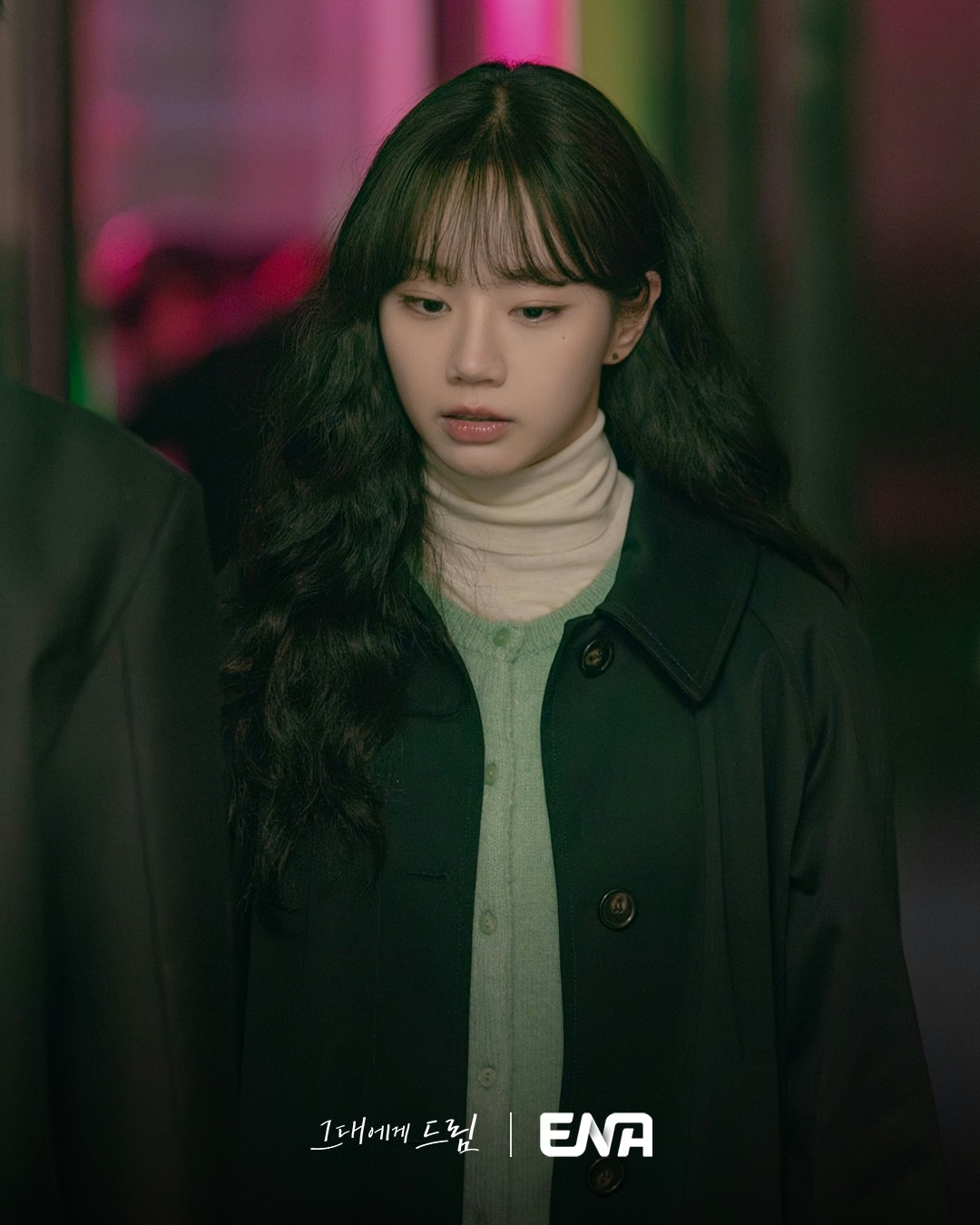
Line 1: "A Life Where Regret Has Crept In Can Fall Apart at Any Moment. My Regret Is Me." 💔
This powerful statement represents one of the most pivotal moments in Hyeri's character development. When Woo Soo Bin suddenly reappears after achieving his directorial dreams, Ju Yi Jae initially responds with coldness and distance. However, this line marks the turning point where she realizes something crucial: her resentment wasn't truly directed at Soo Bin—it was directed at herself.
The beauty of this line lies in its brutal honesty. Rather than blaming external circumstances or other people for her unfulfilled dreams, Yi Jae confronts the uncomfortable truth that she had chosen to abandon her aspirations as a film director. She had prioritized holding onto a relationship over pursuing her passion, and that compromise had festered into deep regret. This moment of self-awareness is transformative because it shifts her from a victim mentality to a position of agency.
In the broader context of K-drama storytelling, this represents an important evolution in how these narratives handle female character development. Instead of having the female lead's happiness depend entirely on romantic reconciliation, the story makes her personal growth and self-acceptance the true foundation of her journey. 🎯
Line 2: "I Want You to Understand How I Felt When I Made It This Far. I Don't Want to Have Any More Regrets. Help Me, Woo Soo Bin. So I Can Run Again." 🏃♀️
After her moment of self-realization, Ju Yi Jae decides to pursue her directorial dreams once more. However, this line reveals the complexity of her journey—it's not just about personal ambition anymore. She's asking Soo Bin to witness her struggle, to understand the weight of her determination, and to support her without trying to protect her from the difficulties ahead.
What's particularly significant about this line is how it addresses a common dynamic in relationships: the tension between support and overprotection. Soo Bin, having already achieved his dreams and understanding the industry's harsh realities, initially tries to shield Yi Jae from the prejudice and challenges she'll face as a woman director in a competitive field. But Yi Jae's plea is for something different—she wants partnership, not protection. She wants to be seen as an equal pursuing her own path, not as someone who needs to be saved.

The image of Yi Jae running across a field despite her leg injury becomes a powerful visual metaphor for her determination. In recent years, K-dramas have increasingly featured female characters who are willing to push through physical and emotional pain to achieve their goals—a shift from earlier narratives that often portrayed female leads as more fragile or dependent. Hyeri's portrayal of Yi Jae embodies this evolution in storytelling. 💪
Line 3: "Thanks to You, All of My Bad Memories Have Become Love, Too." 💕
This line represents the emotional climax of the romantic storyline within the larger narrative of personal growth. It's Ju Yi Jae's heartfelt confession to Woo Soo Bin, acknowledging that his presence in her life has fundamentally transformed how she perceives her painful past.
The context here is important: Woo Soo Bin had been wandering through life burdened by trauma from his childhood. He had achieved external success as a director, but internal emotional wounds continued to haunt him. Through Yi Jae's love and acceptance, he begins to heal. Simultaneously, Yi Jae uses Soo Bin's support as a catalyst to reexamine her own past with compassion rather than bitterness.
This line beautifully illustrates how healthy relationships function as mirrors and healing spaces. Rather than two people trying to "fix" each other, they're witnessing each other's pain and choosing to respond with love. It's a mature perspective on romance that goes beyond typical K-drama tropes. The idea that shared vulnerability can transform trauma into something meaningful—into love itself—is profoundly moving. 🌹
From a psychological standpoint, this represents what therapists call "post-traumatic growth"—the ability to find meaning and even gratitude within difficult experiences. K-dramas have become increasingly sophisticated in exploring these concepts, and Hyeri's delivery of this line captures that emotional complexity beautifully.
Line 4: "I Will Never Waver. I Will See This Through to the Very End With All of You. Because Seeing This Through to the End Together Is What Makes It Great." 🎬
This final memorable line represents Ju Yi Jae's transformation into a confident director and leader. After Woo Soo Bin steps away from the film production due to a scandal, Yi Jae takes charge. Rather than viewing this as a burden, she reframes it as an opportunity to unite the entire production team around a shared vision.
What's remarkable about this statement is how it reflects Yi Jae's evolved understanding of what matters. The film, which began as a personal project between her and Soo Bin, becomes something larger—a collaborative dream involving writers, cinematographers, actors, and crew members. Her commitment isn't just to the project's success; it's to the collective journey of bringing it to life together.
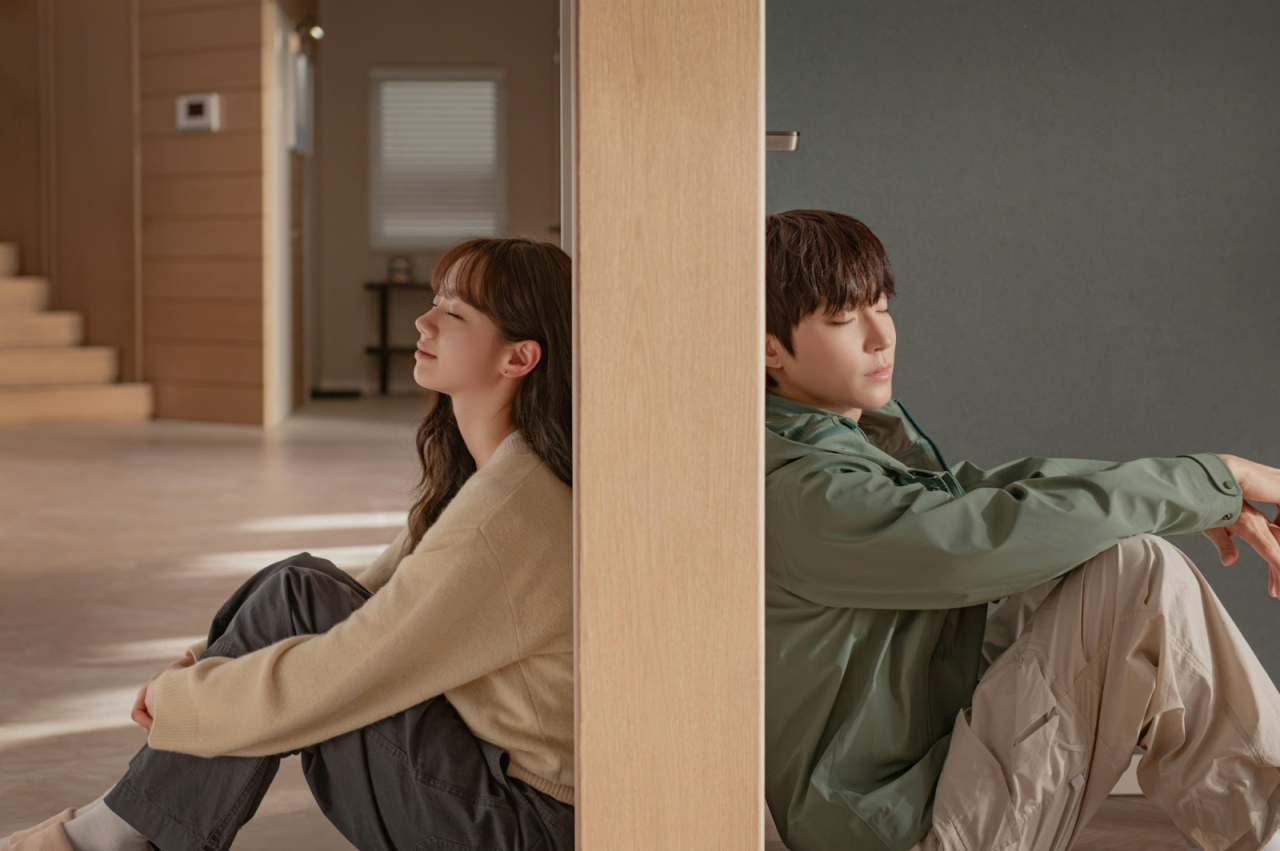
This line also addresses themes of leadership and resilience that have become increasingly important in contemporary K-dramas. Rather than portraying female directors as exceptions or anomalies, "Dream to You" normalizes female leadership in creative industries while acknowledging the real obstacles these professionals face. Yi Jae's conviction in this moment isn't naive—it's grounded in her understanding of both the challenges ahead and the strength that comes from collective effort. 🌟
The Broader Impact on K-Drama Storytelling 📺
Hyeri's portrayal of Ju Yi Jae and these memorable lines contribute to an important shift happening in Korean drama narratives. Rather than focusing solely on romantic resolution, the series prioritizes character growth, professional achievement, and the courage required to pursue meaningful work.
The K-drama industry has been experiencing interesting trends in recent years:
- Female-led narratives are increasingly centering on professional ambitions rather than romance as the primary plot driver
- Mature themes like regret, self-acceptance, and personal reinvention are resonating with older demographic audiences
- Relationship dynamics are being portrayed with greater complexity and emotional intelligence
- Female characters in creative industries are being shown as capable professionals rather than supporting players in male-led stories
Hyeri's performance in "Dream to You" exemplifies these positive developments in the industry. Her ability to deliver emotionally complex lines with authenticity has made the character of Ju Yi Jae particularly memorable among viewers.
What These Lines Reveal About Character Development 🎭
When we examine these four memorable lines together, they form a clear arc of personal transformation:
- Self-awareness: Recognizing that regret stems from one's own choices
- Action: Deciding to pursue dreams despite obstacles and past failures
- Connection: Understanding how love can heal and transform painful experiences
- Leadership: Taking responsibility for collective goals and inspiring others
This progression showcases sophisticated character writing that respects the audience's intelligence. Viewers aren't being told what to feel; instead, they're witnessing a character's genuine evolution through dialogue that feels earned and authentic.
Final Thoughts: Why These Lines Matter 🌈
In an entertainment landscape often criticized for formulaic storytelling, "Dream to You" stands out because it trusts its audience to connect with complex emotional truths. Hyeri's delivery of these memorable lines—with vulnerability, strength, and conviction—has contributed significantly to the drama's emotional resonance.
These lines matter because they speak to universal human experiences: the weight of regret, the courage required to change direction, the healing power of love, and the satisfaction of achieving meaningful goals alongside others. They matter because they're delivered by a female character who is neither a passive observer of her own life nor a one-dimensional archetype.
For viewers seeking K-dramas that offer more than surface-level entertainment, "Dream to You" delivers storytelling that lingers long after the credits roll. And it's largely because of performances like Hyeri's, which bring emotional authenticity to lines that could have easily felt melodramatic in less capable hands. 💫
Whether you're a longtime K-drama enthusiast or new to the genre, these memorable lines from "Dream to You" showcase why the medium continues to captivate audiences worldwide—through genuine human stories told with heart and artistry.
You May Also Like
K-Drama
The Affair Was Just The Beginning: Explosive Drama Unfolds
September 2, 2026
K-Drama
Ryu Jun Yeol's Fingernail Becomes Identity Theft Key in Mousetrap
September 2, 2026
K-Drama
Lee Jung Eun & Kim Moo Yul Lead Star-Studded Revenge Drama Cast
September 2, 2026
K-Drama
The Scandal K-Drama: Son Ye Jin, Ji Chang Wook, Nana
September 2, 2026