Category:
K-DramaKim Hye Jun's Dating Scandal Shakes My Bias My Boss

When Idol Dreams Collide With Corporate Reality 🎬
TvN's "My Bias, My Boss" has taken a dramatic turn that no one saw coming. The webtoon-based romance drama has masterfully woven together the chaos of celebrity rumors, workplace dynamics, and complicated emotions into a compelling narrative that keeps viewers on the edge of their seats. What started as a charming story about an employee meeting her idol crush has evolved into a full-blown scandal that threatens everything the protagonist has worked toward.
The drama's premise seemed straightforward enough: Nam Da Reum, portrayed by Kim Hye Jun, deliberately joins a company hoping to encounter her longtime idol bias Lee Chan, only to find herself caught in an unexpected romance with the company's CEO, Kang Ha Gi, played by Kang Hoon. But as any seasoned K-drama fan knows, nothing stays simple for long.
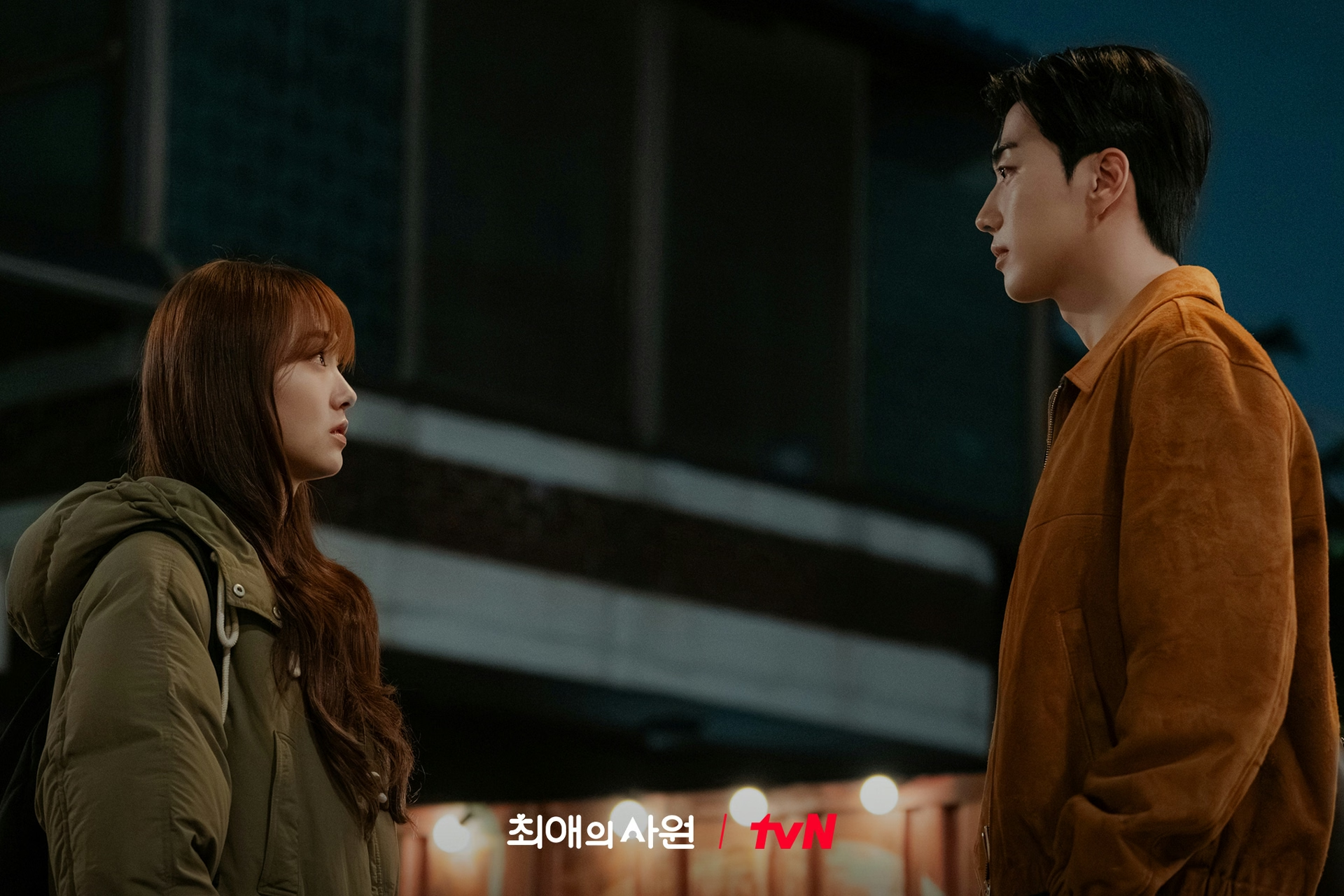
The Perfect Storm: How Rumors Unravel Everything 💔
The turning point arrives when Kang Ha Gi finally realizes his genuine feelings for Nam Da Reum and prepares to confess. However, before he can speak his heart, devastating news breaks: secret photographs surface showing Nam Da Reum and Lee Chan together on what appears to be a romantic date. The timing couldn't be worse, and the implications are immediately damaging.
What makes this situation particularly tragic is the context. Nam Da Reum had actually worked up the courage to reject Lee Chan's romantic advances—a significant personal victory that Kang Ha Gi himself had encouraged her to pursue. She had finally begun to see beyond her idol fantasy and recognize her genuine feelings for someone real in her life. Yet those private moments from a past encounter become weaponized by someone with a camera and questionable intentions.

The Domino Effect of Misinformation 📱
What unfolds next is a masterclass in how quickly rumors can spiral out of control in the digital age. The dating scandal doesn't just affect Nam Da Reum's personal relationships—it creates a cascading crisis that threatens her professional standing and the entire company.
Kang Ha Gi, wounded by what he perceives as betrayal and deception, refuses to believe Nam Da Reum's desperate attempts to explain the situation. His disappointment clouds his judgment, and he becomes unable to see past the surface of the scandal. This is where the drama brilliantly explores the theme of trust and how easily it can shatter when circumstances seem damning.
The situation deteriorates further when the narrative shifts from simple dating rumors to something far more sinister: Nam Da Reum becomes labeled as a sasaeng fan—a term that carries significant negative connotations in Korean entertainment culture. Sasaeng fans are known for their obsessive and often invasive behavior toward celebrities, and this accusation transforms Nam Da Reum from a sympathetic character into someone viewed as unstable and dangerous by the public.
Corporate Chaos and Public Backlash 🌪️
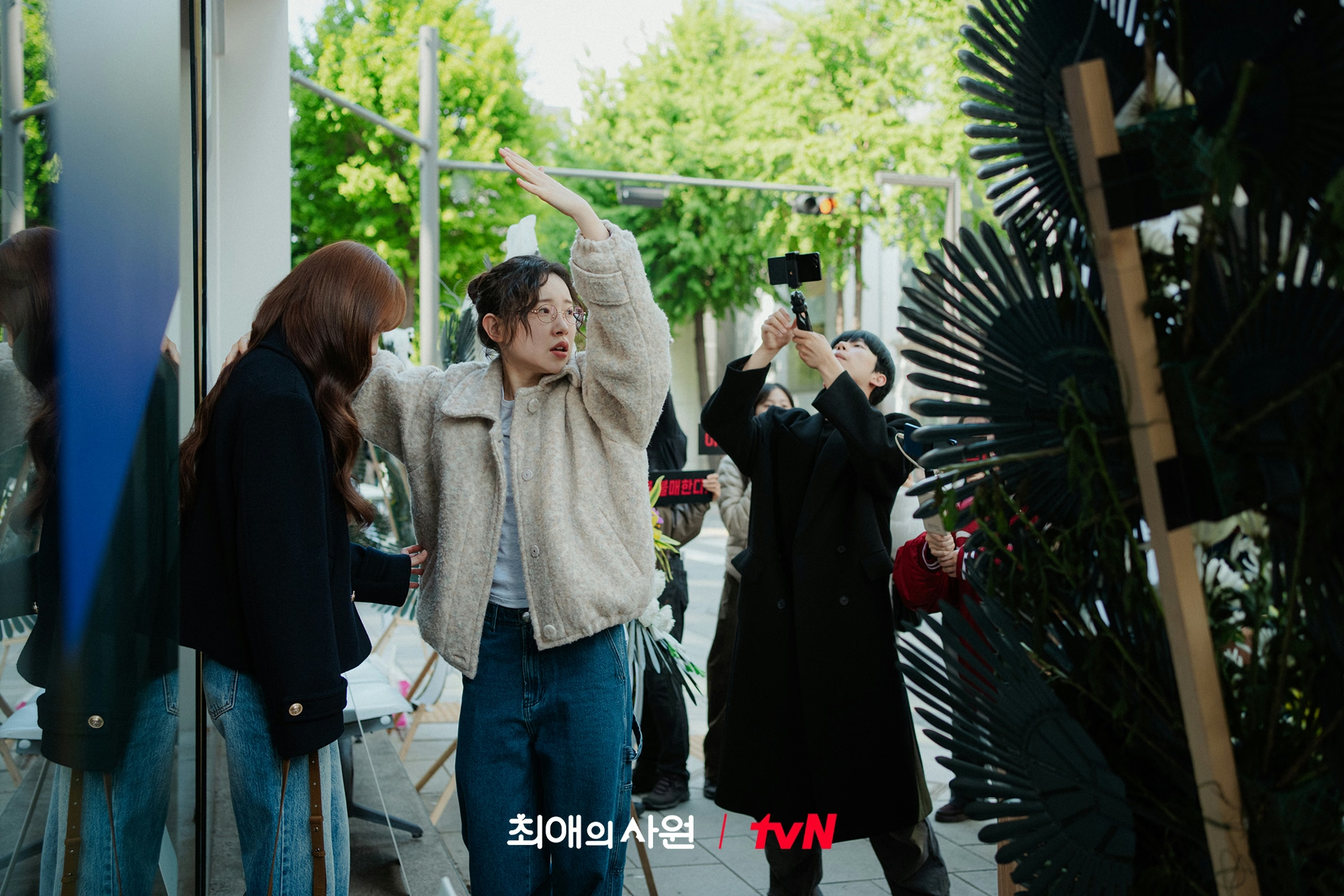
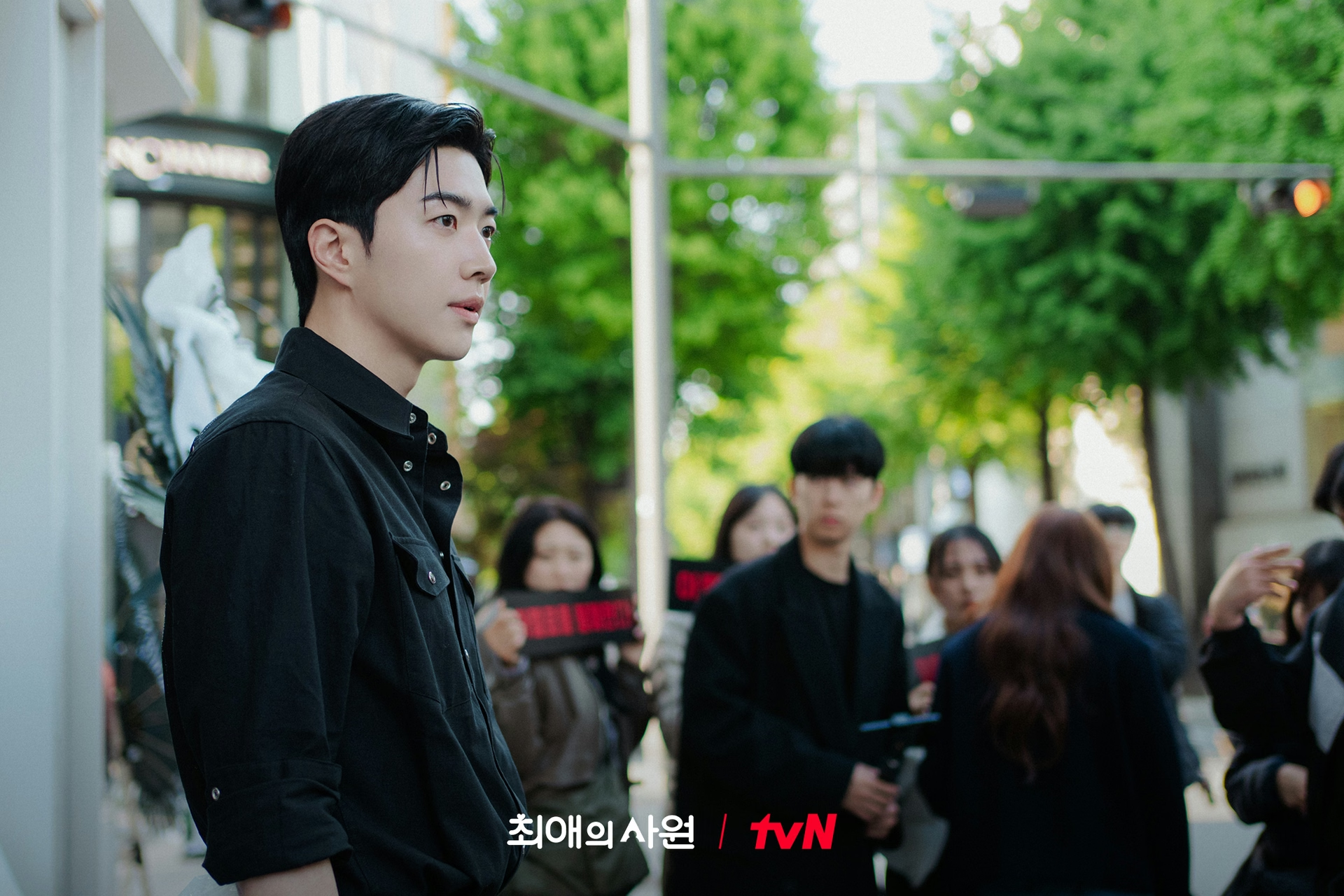
The consequences extend beyond personal drama into the corporate sphere. APPELLO, the company where Nam Da Reum works, becomes the target of public boycott calls. Funeral wreaths—a dramatic Korean protest symbol—surround the company headquarters as crowds gather to voice their disapproval. This visual representation of corporate "death" underscores the severity of the situation and how quickly public opinion can turn destructive.
Nam Da Reum finds herself isolated and overwhelmed. The newly released stills from the drama show her at the center of this chaos, her head bowed in shame and despair as if she were the villain in this story rather than a victim of circumstance. Her longtime friend Lee Seul Ah, portrayed by Kim Ah Young, attempts to shield her from the hostile crowds, but even loyal friendship proves insufficient against the tide of public anger.
The Cost of Sacrifice: When Resignation Seems Like the Only Option 😔
Faced with an impossible situation, Nam Da Reum makes the heartbreaking decision to resign from her position. She believes that removing herself from the company will somehow resolve the crisis and protect those around her. This act of self-sacrifice speaks to her character—she's willing to give up her career, her dreams, and her proximity to Kang Ha Gi in an attempt to undo the damage.
The resignation represents more than just leaving a job; it symbolizes the end of multiple narratives. She's walking away from:
- Her professional aspirations and the opportunity to build a career
- Her complicated relationship with Kang Ha Gi, just as it was becoming genuine
- Her chance to prove herself and overcome the scandal
- Her presence in the company that had become her second home
This decision reflects a common theme in K-dramas where characters attempt to solve complex problems through self-elimination, often leading to even more dramatic complications.
The Deeper Narrative: Celebrity Culture and Digital Witch Hunts 🔍
Beyond the romantic drama, "My Bias, My Boss" taps into something profoundly relevant to modern Korean society. The scandal storyline reflects real issues within the entertainment industry, where privacy is constantly violated, rumors spread at lightning speed, and public judgment can be swift and merciless.
The webtoon-to-screen adaptation demonstrates how digital media amplifies misinformation. A single photograph, taken without context or consent, becomes the foundation for an entire narrative that destroys lives. This mirrors real-world incidents where celebrities and public figures have faced devastating consequences from misunderstood or manipulated images.
The sasaeng fan accusation, in particular, highlights how quickly victimhood can be reframed as villainy. Nam Da Reum becomes guilty until proven innocent in the court of public opinion—a reversal of justice that many viewers will find uncomfortably familiar.
What This Means for K-Drama Storytelling 🎭
The handling of this scandal arc reveals the sophistication of contemporary K-drama writing. Rather than treating the scandal as a simple plot device, the show explores its multifaceted consequences: emotional, professional, social, and reputational. Each character responds differently based on their values, insecurities, and understanding of the situation.
Kang Ha Gi's inability to trust Nam Da Reum, despite their growing connection, shows how easily doubt can undermine even the strongest feelings. His character arc will likely involve confronting his own insecurities and learning to believe in her when it matters most.
Looking Ahead: What Comes Next? ✨
The August 25 episode promises to deliver resolution—or perhaps further complications—as the story continues to unfold. Viewers are left wondering whether Kang Ha Gi will eventually believe Nam Da Reum's explanations, whether she'll go through with her resignation, and how the couple can possibly rebuild trust after such devastation.
The drama has successfully transformed what could have been a simple romantic storyline into a nuanced exploration of trust, ambition, scandal, and redemption. It asks difficult questions about how we judge others based on incomplete information and how we navigate the intersection of personal desires and professional responsibilities.
Final Thoughts: The Power of Context 💭
"My Bias, My Boss" reminds us that scandals are rarely as simple as they appear on the surface. Behind every headline is a complex human story filled with misunderstandings, intentions, and consequences. Nam Da Reum's journey from devoted idol fan to corporate employee to scandal victim illustrates how quickly circumstances can change and how important it is to look beyond appearances.
The drama's exploration of these themes resonates with audiences because they reflect real struggles in contemporary society—the pressure to maintain perfect images, the danger of misjudgment, and the difficulty of proving innocence in a world quick to condemn. As viewers await the next episode, they're not just invested in whether the romance survives; they're hoping for a story that validates the importance of truth and trust in a world increasingly dominated by rumors and misinterpretation.
You May Also Like
K-Drama
The Affair Was Just The Beginning: Explosive Drama Unfolds
September 2, 2026
K-Drama
Ryu Jun Yeol's Fingernail Becomes Identity Theft Key in Mousetrap
September 2, 2026
K-Drama
Lee Jung Eun & Kim Moo Yul Lead Star-Studded Revenge Drama Cast
September 2, 2026
K-Drama
The Scandal K-Drama: Son Ye Jin, Ji Chang Wook, Nana
September 2, 2026