Category:
BollywoodLove Lottery: Tushar's Bold Take on Men's Rights
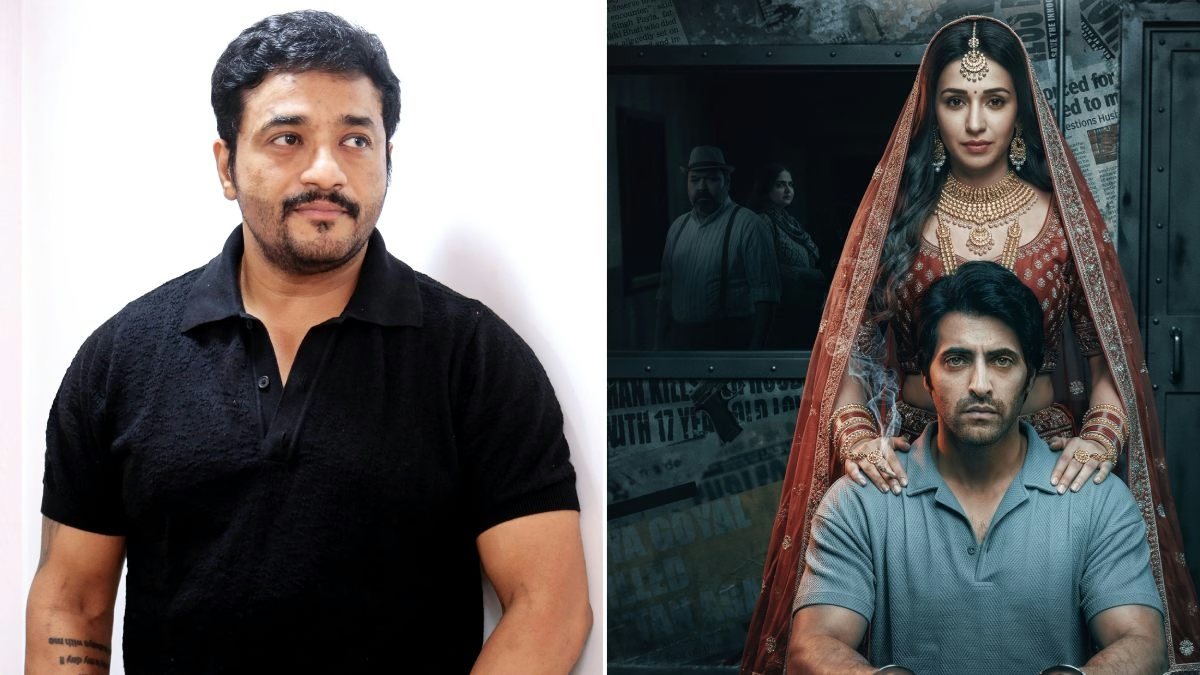
A Filmmaker's Mission to Challenge Societal Narratives 🎬
In a landscape where Bollywood frequently explores romantic entanglements and domestic dramas, filmmaker Kuldeep Bhargava—known professionally as 'Tushar'—is stepping into uncharted territory with his debut production. His upcoming film Love Lottery represents a significant shift in how Indian cinema addresses contemporary social issues, particularly focusing on perspectives that have remained largely unexplored on the big screen.
As a successful businessman-turned-filmmaker from Lucknow, Tushar brings a unique perspective to filmmaking that blends commercial sensibilities with socially conscious storytelling. His journey from entrepreneurship to cinema reflects a broader trend in the Indian entertainment industry, where established professionals are increasingly using their platforms to tell meaningful stories.
Understanding the Concept Behind Love Lottery 💭
Love Lottery isn't just another courtroom drama or suspense thriller—it's a carefully crafted narrative designed to spark conversations about men's rights and the complexities of modern relationships. The film draws inspiration from real-life events, lending authenticity and emotional weight to its storyline.
Tushar's vision for this project extends beyond mere entertainment. He recognized a gap in contemporary cinema where the nuanced struggles men face within legal frameworks and relationship dynamics remain largely unexplored. The film aims to humanize these experiences while questioning societal stereotypes that often oversimplify relationship conflicts.
The core themes of the film include:
- The intersection of marriage, law, and personal trust
- Societal expectations placed on men in modern relationships
- The emotional and financial toll of legal battles
- The importance of empathy and understanding in resolving conflicts
- Gender dynamics within the Indian legal system
Cinema Ganj Films: A New Voice in Indian Cinema 🎥
The production banner under which Love Lottery is being created—Cinema Ganj Films—represents Tushar's commitment to producing socially relevant content. This production house operates on a philosophy that cinema serves as a powerful catalyst for social change and awareness.
In recent years, we've witnessed an uptick in independent production houses focusing on niche narratives. According to industry analysts, productions addressing social issues have shown improved audience engagement, particularly among urban demographics aged 25-45. Cinema Ganj Films positions itself within this growing segment of socially conscious filmmaking.
Tushar's approach differs from mainstream Bollywood productions in several ways. Rather than relying solely on star power, the production emphasizes storytelling integrity and thematic relevance. This strategy aligns with emerging trends where audiences increasingly seek meaningful content alongside traditional entertainment.
The Creative Team Behind the Vision ✨
Bringing Love Lottery to life required assembling a talented ensemble of creative professionals, each contributing their expertise to the project:
Direction & Music: Director Arvind Pandey, alongside composer Varun Mishra and co-composer Arvind Pandey, craft the film's emotional landscape. The music composition plays a crucial role in amplifying the tension and emotional depth of courtroom scenes.
Screenplay: Ankur Khattri's screenplay weaves together complex narratives with character-driven storytelling. The writing emphasizes nuanced dialogue that reflects realistic relationship dynamics and legal procedures.
Cinematography: Navin V. Mishra's visual storytelling captures the intensity and gravity of the narrative. The cinematographic approach likely employs techniques common to courtroom dramas—close-ups during emotional moments, wide shots establishing legal settings, and color grading that reflects the film's serious tone.
Cast Selection: The ensemble includes Akshay Oberoi and Heli Daruwala as leads, representing the modern urban couple entangled in legal and emotional conflicts. Supporting performances by Kabir Duhan Singh, Hemant Pandey, Vijayant Kohli, and Santosh Shukla add layers of complexity to the narrative.
The Leads and Their Characters 🌟
Akshay Oberoi and Heli Daruwala anchor the film as the central couple whose relationship becomes the focal point of the story. Their casting reflects Tushar's commitment to selecting actors capable of portraying nuanced, multidimensional characters.
Akshay Oberoi, known for his work in films like Chandni Bar and web series, brings a certain intensity to dramatic roles. His selection suggests the film requires an actor capable of conveying internal conflict and emotional complexity. Heli Daruwala, while relatively newer to mainstream cinema, likely provides a fresh perspective to the female lead role.
The supporting cast members serve specific narrative functions. Kabir Duhan Singh, known for his work in action films, may portray a character providing conflict or external pressure. Hemant Pandey's involvement suggests comedic relief or a sympathetic character providing perspective. This careful balance of casting demonstrates thoughtful production planning.
Men's Rights in Cinema: Breaking New Ground 🔥
One of the most distinctive aspects of Love Lottery is its focus on men's rights within relationship and legal contexts. This represents relatively unexplored territory in mainstream Bollywood cinema, where narratives often center on women's experiences or traditional romantic frameworks.
The film's thematic focus addresses several real-world issues:
Legal Disparities: Indian family law, particularly sections related to domestic violence, maintenance, and custody, has been criticized by men's rights advocates for potential misuse. Love Lottery appears to explore these complexities without necessarily advocating for any particular position.
Societal Perceptions: Modern relationships exist within a framework of societal expectations. Men often face pressure to conform to specific roles—financial providers, emotional pillars, traditional authority figures—while simultaneously being expected to embrace progressive values.
Trust and Communication: The film emphasizes how breakdowns in trust and communication can escalate conflicts, leading to legal entanglements that benefit neither party.
The Courtroom Drama-Suspense Thriller Blend 📚
Love Lottery operates at the intersection of two popular film genres, each bringing distinct storytelling elements:
Courtroom Drama Elements: These scenes likely feature legal arguments, revelations of hidden truths, and the formal procedures of Indian courts. The genre allows for intellectual engagement as audiences follow legal logic and arguments.
Suspense Thriller Components: These elements maintain narrative momentum and unpredictability. Viewers remain uncertain about character motivations, hidden secrets, and ultimate resolutions.
This hybrid approach keeps audiences engaged on multiple levels—intellectually through legal arguments and emotionally through suspenseful plot developments. The background score, composed by Varun Mishra and Arvind Pandey, plays a crucial role in heightening tension and maintaining pacing throughout.
Drawing from Reality: The Authenticity Factor 💫
Tushar's decision to ground Love Lottery in real-life events adds significant weight to the narrative. This approach, sometimes called "inspired by true events," provides several advantages:
Emotional Resonance: Audiences often connect more deeply with stories rooted in reality. Knowing the narrative reflects actual experiences creates emotional investment.
Social Relevance: Real-world inspiration ensures the film addresses genuine issues rather than fictional constructs. This relevance encourages post-viewing discussions and social media conversations.
Authenticity in Details: Real-life inspiration typically results in more accurate portrayals of legal procedures, relationship dynamics, and emotional reactions. This attention to detail distinguishes Love Lottery from purely fictional narratives.
Production Challenges and Creative Solutions 🎭
Tushar openly acknowledged the challenges faced during production. Portraying sensitive issues authentically while avoiding stereotypes requires careful navigation. The production team had to balance:
- Sensitivity with Honesty: Addressing difficult topics without sensationalizing or trivializing them
- Multiple Perspectives: Ensuring the narrative doesn't devolve into one-sided advocacy
- Ensemble Cast Management: Coordinating talented actors across tight filming schedules
- Tonal Balance: Maintaining dramatic intensity while preserving narrative coherence
These challenges are common in socially conscious filmmaking. Productions like Mulk, Article 15, and Badhaai Do faced similar hurdles while attempting to address complex social issues. The difference lies in execution—how effectively filmmakers balance message with entertainment.
The September 2026 Release and Industry Implications 📅
The scheduled release date of September 18, 2026, positions Love Lottery strategically within the Indian film calendar. This timing allows for substantial post-production work and marketing campaigns while avoiding major Bollywood releases.
The two-year production timeline reflects the complexity of creating quality cinema addressing sensitive themes. This extended timeline permits thorough post-production, sound design, color grading, and marketing preparation.
What Audiences Should Expect 🎬
Tushar envisions Love Lottery as more than entertainment—he positions it as a catalyst for social dialogue. Viewers approaching the film should expect:
Intellectual Engagement: The courtroom elements require audience attention to legal arguments and procedural details. This intellectual component elevates the viewing experience beyond passive consumption.
Emotional Complexity: The film explores relationships in their messiest, most complicated forms. Audiences should prepare for nuanced character portrayals that resist simple categorization as "good" or "bad."
Thought-Provoking Themes: Post-viewing discussions will likely dominate social media and personal conversations. The film encourages reflection on personal beliefs about relationships, law, and societal expectations.
The Broader Context: Social Cinema in Modern Bollywood 🌍
Love Lottery arrives at a moment when Indian cinema increasingly addresses social issues. Recent years have witnessed successful films tackling:
- Gender dynamics and sexual harassment (Article 15, Raazi)
- Caste discrimination (Mulk, Jai Bhim)
- LGBTQ+ rights (Badhaai Do, Shubh Mangal Zyada Saavdhaan)
- Environmental concerns (Jal)
- Mental health (Dil Bechara)
This trend reflects audience appetite for meaningful narratives. Box office data increasingly shows that socially conscious films attract substantial viewership, particularly among urban audiences and diaspora communities. Love Lottery positions itself within this emerging landscape.
Tushar's Vision for Future Projects 🚀
Beyond Love Lottery, Tushar expresses commitment to continuing socially relevant filmmaking. His stated interest in exploring gender rights, societal norms, and legal reforms suggests a long-term vision for Cinema Ganj Films as a production house focused on social change through cinema.
This commitment aligns with broader industry trends where filmmakers increasingly view cinema as a tool for social awareness. Successful examples like Aamir Khan Productions and Rajkumar Hiranandani demonstrate the viability of socially conscious production houses within commercial cinema.
The Message and the Movement 💡
Ultimately, Love Lottery represents more than a single film—it symbolizes a movement toward more comprehensive storytelling in Indian cinema. By addressing men's rights and relationship complexities, the film challenges audiences to reconsider their preconceptions.
Tushar's emphasis on empathy and understanding reflects a mature approach to filmmaking. Rather than advocating for specific positions, the film appears designed to encourage viewers to consider multiple perspectives and recognize the humanity in all parties involved in relationship conflicts.
Conclusion: Cinema as Catalyst for Change ✨
Love Lottery stands poised to make a significant impact on Indian cinema discourse. Through its blend of courtroom drama and suspense thriller elements, combined with a focus on men's rights and societal perceptions, the film addresses a gap in mainstream narrative cinema.
Kuldeep Bhargava's transition from businessman to filmmaker demonstrates how diverse professionals bring fresh perspectives to cinema. His commitment to socially relevant storytelling through Cinema Ganj Films suggests audiences can expect meaningful content that entertains while encouraging reflection.
As the September 2026 release date approaches, viewers should prepare themselves for a film that challenges assumptions, explores relationship complexities, and advocates for empathy and understanding. Love Lottery promises to be a watershed moment in how Indian cinema addresses men's rights and modern relationship dynamics—a necessary conversation long overdue on the big screen.
You May Also Like

Bollywood
T-Series Pan-India Strategy: How Bhushan Kumar Is Redefining Indian Cinema
September 2, 2026
Bollywood
Gandhari Trailer Review: Taapsee Pannu's Fierce Mother
September 1, 2026

Bollywood
Ali Fazal Reveals Where Mirzapur: The Movie Picks Up
September 1, 2026

Bollywood
Daayra Poster Reveals Kareena & Prithviraj's Intense Showdown
September 1, 2026