Category:
K-DramaMade In Korea 2: How Hyun Bin, Jung Woo Sung Transform Their Roles
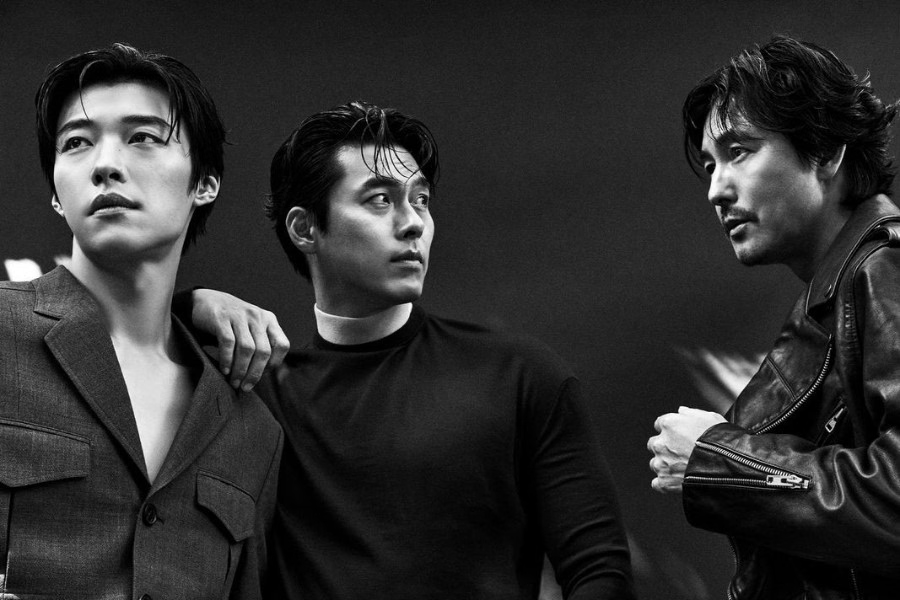
A Nine-Year Evolution: The Return of Korean Television Excellence 🎬
The highly anticipated second season of "Made in Korea" marks a significant milestone in Korean television history, bringing back one of the most compelling dramas to grace the small screen. Set nine years after the explosive conclusion of Season 1, the sequel delves deeper into the moral complexities and power struggles that defined the original series, with three powerhouse actors revealing how their characters have undergone dramatic transformations during the intervening years.
The premise of "Made in Korea 2" centers on the diverging paths of ambition, where characters who once stood at crossroads now find themselves navigating entirely new territories of power, corruption, and redemption. This evolution represents more than just character development—it's a reflection of how the Korean drama industry continues to push boundaries in storytelling depth and character complexity.
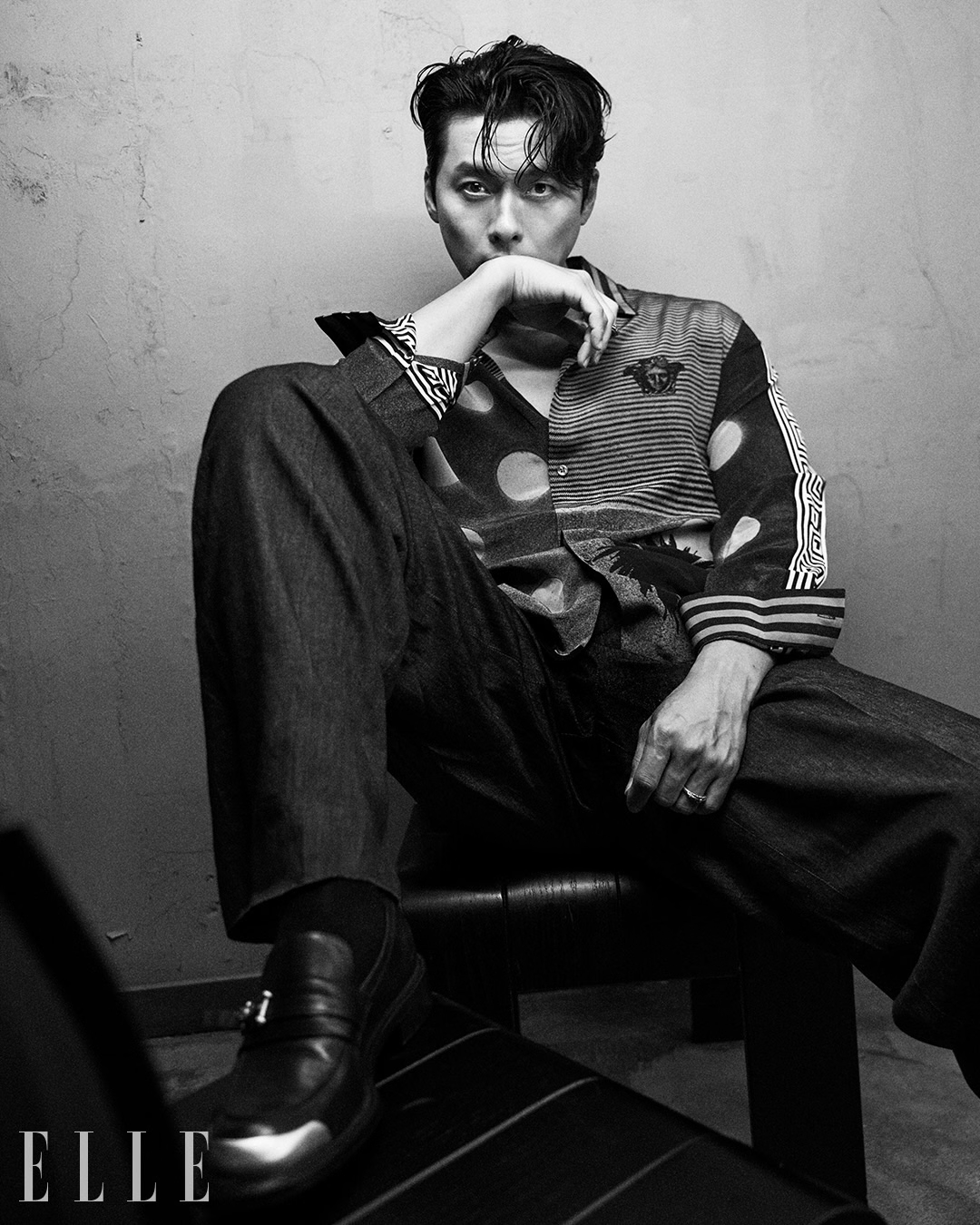
Hyun Bin's Baek Ki Tae: From Ambitious to Audacious 💫
Hyun Bin returns as Baek Ki Tae, the character whose relentless pursuit of wealth and power drove much of the original series' tension. In Season 2, the actor reveals that his character has undergone a profound metamorphosis, becoming increasingly bold and commanding in his approach to dominance.
"The transformation isn't just about what he says or does," Hyun Bin explained during his interview with ELLE Korea. "It's evident in every physical detail—the way he carries himself, how he adjusts his tie, the confidence in his stride. When someone accumulates power, their entire demeanor shifts, and that's what I wanted to capture."
This meticulous attention to detail reflects the seasoned actor's commitment to authenticity. The physical manifestations of power—posture, speech patterns, sartorial choices—become visual storytelling devices that communicate character evolution without exposition. Hyun Bin's approach demonstrates why Korean dramas have garnered international acclaim, with actors treating subtle character nuances with the same gravitas as major plot points.
What makes Hyun Bin's performance particularly noteworthy is his reflection on the emotional weight of revisiting a character over an extended period. "This is the first time I've held onto a character for this long," he shared. "My connection to Baek Ki Tae has become something uniquely personal. There's a special bond that forms when you inhabit someone's skin for years."
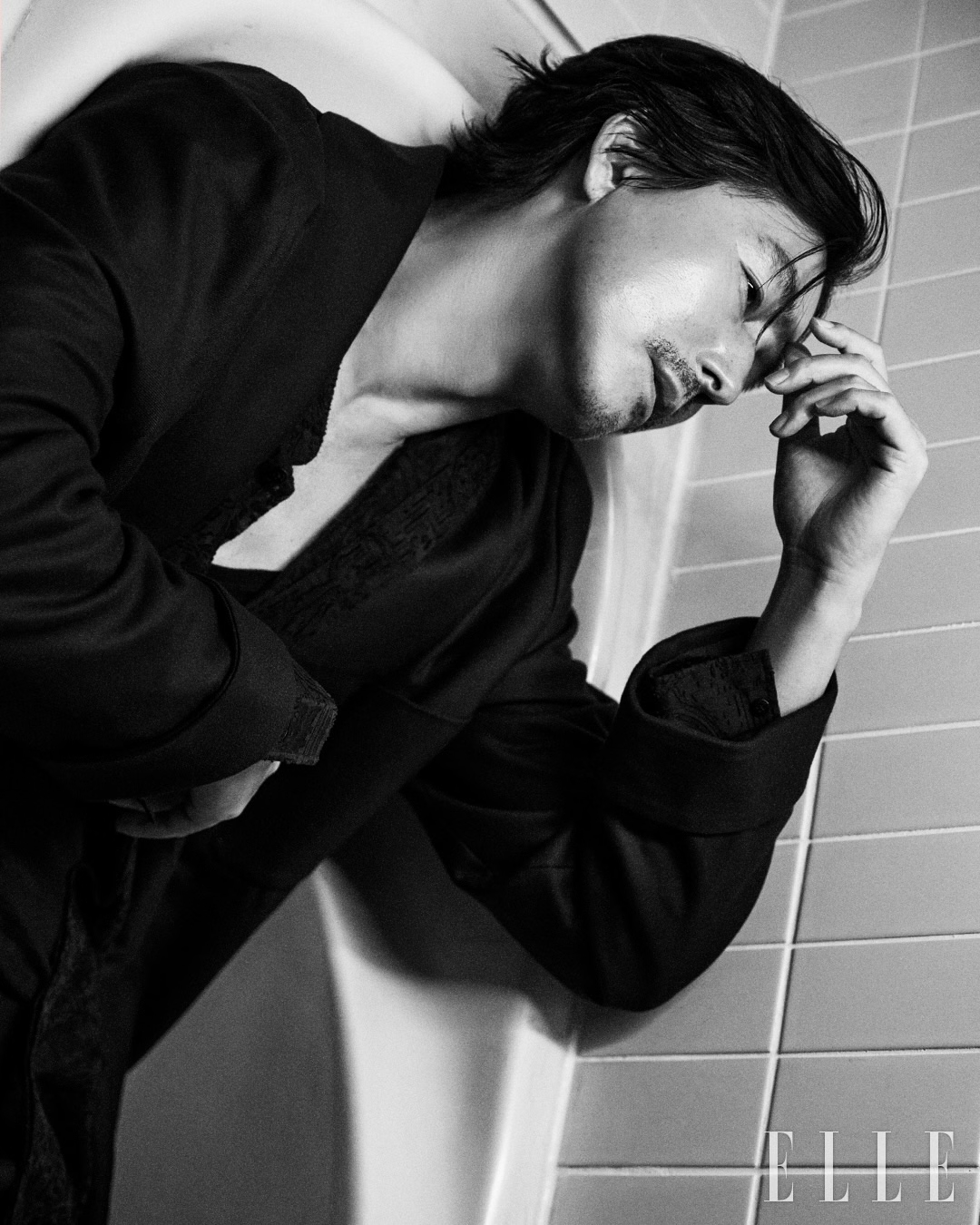
Jung Woo Sung's Geon Young: Resilience Meets Ruthlessness 🔥
Jung Woo Sung's character, prosecutor Jang Geon Young, represents the moral counterbalance to Hyun Bin's antagonist. In the original series, Geon Young sacrificed everything in pursuit of justice. Nine years later, the character emerges from the shadows with renewed purpose and hardened resolve.
"Nine years of waiting and preparation have transformed Geon Young into someone far more aggressive and formidable," Jung Woo Sung explained. The actor emphasized that while the surface-level changes are visible—increased toughness and strategic aggression—the deeper thematic shift reveals something more profound about the series' central message.
The actor articulated a crucial insight about "Made in Korea 2" that elevates it beyond typical revenge narratives: "Both characters are ultimately like small bubbles caught in the currents of their era. They're swept along by forces larger than themselves." This philosophical perspective transforms the drama from a simple good-versus-evil confrontation into an exploration of individual agency within systemic constraints.
Jung Woo Sung's interpretation suggests that the series asks viewers to contemplate uncomfortable questions about morality and legitimacy. "Just because you achieve the values you pursue, does that make them truly legitimate?" he posed. This question sits at the heart of what makes Korean dramas intellectually stimulating—they refuse to offer easy answers or clear moral absolutes.
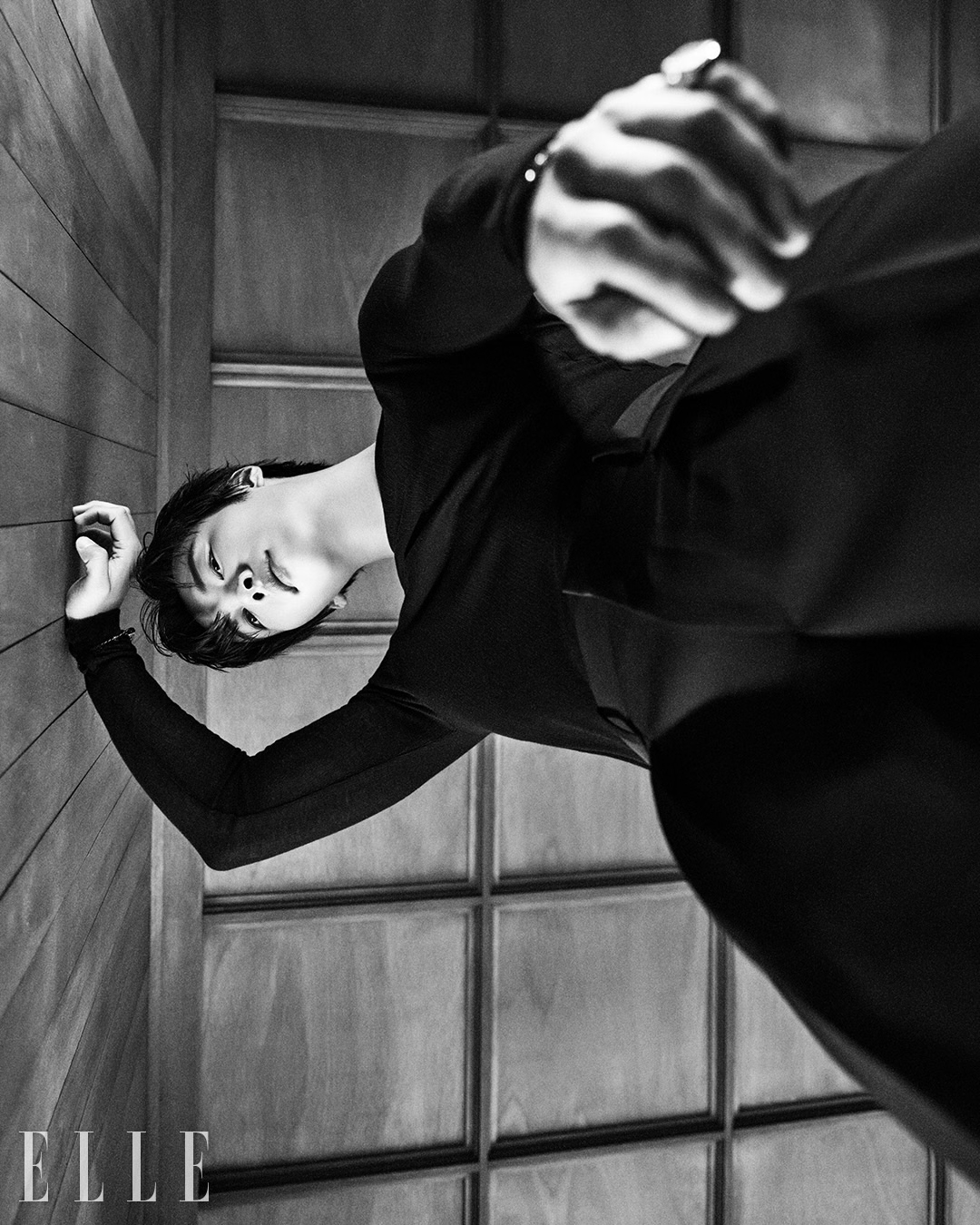
Woo Do Hwan's Ki Hyun: The Third Path to Power ✨
Woo Do Hwan joins the ensemble as Baek Ki Hyun, the younger brother who charts his own course toward influence and control. Rather than simply following in his older sibling's footsteps, Ki Hyun represents an alternative philosophy of power accumulation—one rooted in protection and responsibility rather than pure ambition.
"Over the nine-year gap, Ki Hyun has matured considerably and taken on increased responsibilities," Woo Do Hwan revealed. "His motivations have shifted toward building power as a means of protecting his family rather than personal aggrandizement." This character arc introduces a nuanced exploration of how family bonds intersect with personal ambition.
The actor's approach to his role demonstrates the collaborative nature of prestige Korean drama production. "I spent considerable time observing how my senior actors approached both their craft and their professional lives," Woo Do Hwan shared. This mentorship dynamic reflects the hierarchical respect embedded in Korean entertainment culture, where younger actors view established stars as teachers and role models.
Woo Do Hwan's commitment to preparation and directorial collaboration underscores a broader trend in the Korean drama industry: the emphasis on deliberate, thoughtful character construction. "I was always receptive to the director's vision and prepared more thoroughly than anyone," he noted. His aspiration to sustain a career creating quality work over decades speaks to the long-term vision increasingly shaping Korean entertainment.
The Deeper Narrative: Organization, Ambition, and Era 🌟
"Made in Korea" distinguishes itself through its thematic richness and refusal to reduce characters to simple archetypes. The series functions as a meditation on institutional power structures and how individuals navigate organizational hierarchies. Jung Woo Sung's description captures this essence: "The story portrays various kinds of people struggling within an organization."
This organizational focus reflects real-world dynamics that resonate across cultures. The Korean drama industry has increasingly gravitated toward stories that examine systemic corruption, institutional complicity, and the moral compromises required to survive within rigid hierarchies. "Made in Korea 2" appears to deepen this exploration, suggesting that individual choices matter less than the larger historical and institutional forces that shape outcomes.
The nine-year time jump serves a crucial narrative function. It allows the series to explore how characters evolve when given years to consolidate power, prepare counteroffensives, and recalibrate their strategies. This temporal distance creates space for genuine character transformation rather than simple escalation of existing conflicts.
Production Excellence and Industry Standards 🎭
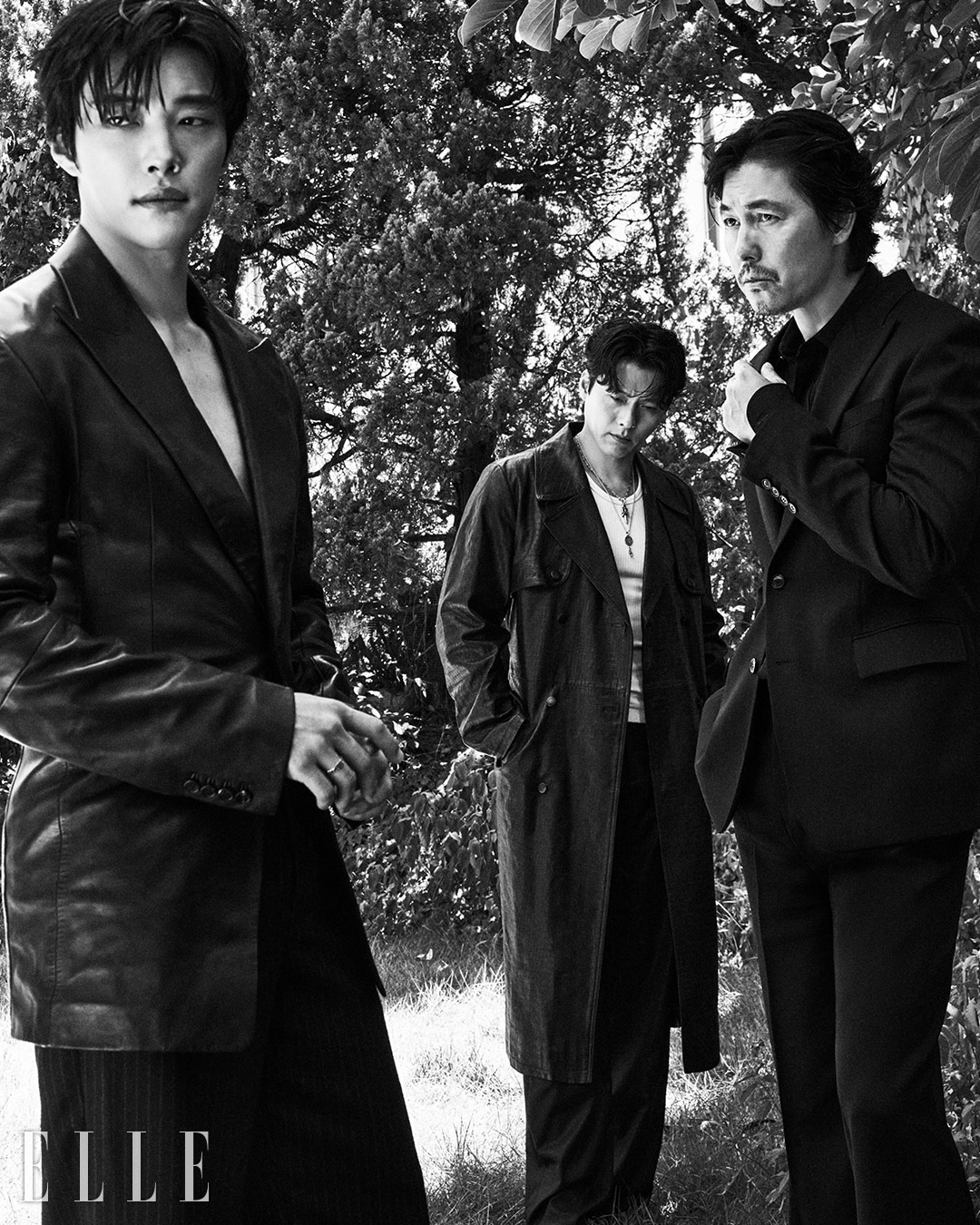
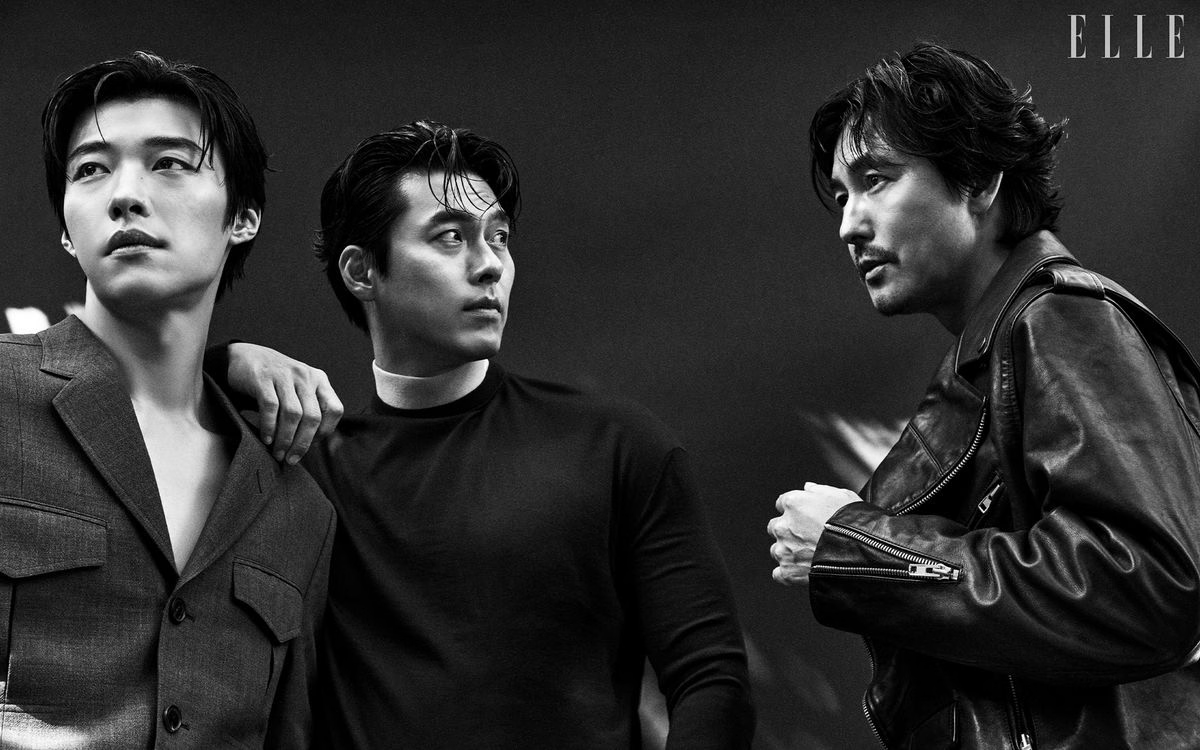
The commitment displayed by Hyun Bin, Jung Woo Sung, and Woo Do Hwan reflects broader quality standards that have made Korean dramas internationally competitive. The pictorial shoot with ELLE Korea, coupled with in-depth interviews exploring character development, demonstrates how prestige Korean productions treat their narratives as serious artistic endeavors worthy of fashion and lifestyle magazine coverage.
This cross-media approach—where dramas extend into fashion, beauty, and lifestyle spaces—has become standard for high-profile Korean productions. It signals that these stories operate at the intersection of entertainment and cultural commentary, deserving attention from multiple cultural perspectives.
What Lies Ahead: Release Schedule and Viewer Expectations 📺
"Made in Korea 2" will premiere with a two-episode opening on September 9, followed by a weekly release schedule of two episodes every Wednesday. This structured rollout allows viewers to process the narrative developments while maintaining momentum throughout the season. The six-episode total length suggests a tightly constructed narrative that prioritizes quality over quantity—a hallmark of successful Korean drama production.
The decision to maintain the original cast while advancing the timeline by nine years demonstrates confidence in the material and the actors' abilities to sustain audience investment. It's a risky creative choice that could alienate viewers seeking fresh starts, but it also rewards loyal audiences with genuine continuation rather than reboot energy.
The Lasting Impact of Character Commitment 💎
What emerges from these actors' reflections is a profound commitment to their craft that transcends typical entertainment industry standards. Hyun Bin's emotional connection to Baek Ki Tae, Jung Woo Sung's philosophical engagement with character motivation, and Woo Do Hwan's dedication to preparation all signal that "Made in Korea 2" represents serious artistic endeavor.
The willingness of these accomplished actors to revisit characters and narratives speaks to the creative satisfaction found in long-form storytelling. In an industry often driven by novelty and franchise expansion, the commitment to deepening existing stories offers something increasingly rare: genuine artistic evolution.
Final Thoughts: Why This Matters for Korean Drama Fans 🎬
"Made in Korea 2" arrives at a moment when Korean dramas have achieved unprecedented international recognition. Yet the series remains fundamentally Korean in its thematic concerns—institutional power, moral ambiguity, historical consciousness, and the tension between individual agency and systemic forces.
The character transformations described by Hyun Bin, Jung Woo Sung, and Woo Do Hwan promise a sequel that doesn't simply repeat the original's formula but deepens its exploration of fundamental questions about ambition, legitimacy, and human nature. For viewers seeking sophisticated narrative storytelling with philosophical depth, "Made in Korea 2" presents a compelling case for investment.
As the September premiere approaches, the groundwork laid by these three exceptional performers suggests that the sequel will honor the original's legacy while charting new creative territory. The Korean drama industry continues to demonstrate why it deserves the global attention it has garnered—and "Made in Korea 2" appears positioned to exemplify exactly why.
You May Also Like
K-Drama
The Affair Was Just The Beginning: Explosive Drama Unfolds
September 2, 2026
K-Drama
Ryu Jun Yeol's Fingernail Becomes Identity Theft Key in Mousetrap
September 2, 2026
K-Drama
Lee Jung Eun & Kim Moo Yul Lead Star-Studded Revenge Drama Cast
September 2, 2026
K-Drama
The Scandal K-Drama: Son Ye Jin, Ji Chang Wook, Nana
September 2, 2026