Category:
K-DramaThe Journey to Gyeongju: Family Revenge Thriller
A Twisted Tale of Vengeance and Mystery 🎬
South Korean cinema continues to deliver compelling narratives that blend family drama with darker psychological elements. The upcoming film "The Journey to Gyeongju" promises to be one of the most intriguing releases of the season, combining elements of mystery, revenge, and family dysfunction into a gripping narrative that will keep audiences on the edge of their seats.
The premise alone is captivating: a mother and her three daughters embark on what appears to be an ordinary family vacation, but beneath the surface lies a sinister purpose rooted in eight years of grief and unanswered questions. This isn't your typical road trip movie—it's a meticulously planned journey driven by loss and determination.

The Dark Secret Behind the Family Journey 🔍
At the heart of this narrative lies a haunting mystery: the youngest daughter, Gyeong Ju, vanished during a school field trip to Gyeongju eight years ago. Rather than accepting her disappearance as a closed case, her mother and sisters have spent nearly a decade preparing for this journey. The film explores the psychological toll that unresolved trauma can have on families and how grief can transform into something far more dangerous.
This premise taps into a growing trend in Korean cinema—the exploration of family-centered revenge narratives. Unlike traditional revenge thrillers that focus on individual protagonists, "The Journey to Gyeongju" examines how collective trauma binds family members together and can drive them toward extraordinary measures. The film represents a sophisticated examination of how ordinary people can be pushed to their limits when faced with systemic injustice or unsolved crimes.
Visual Storytelling Through Bizarre Details ✨
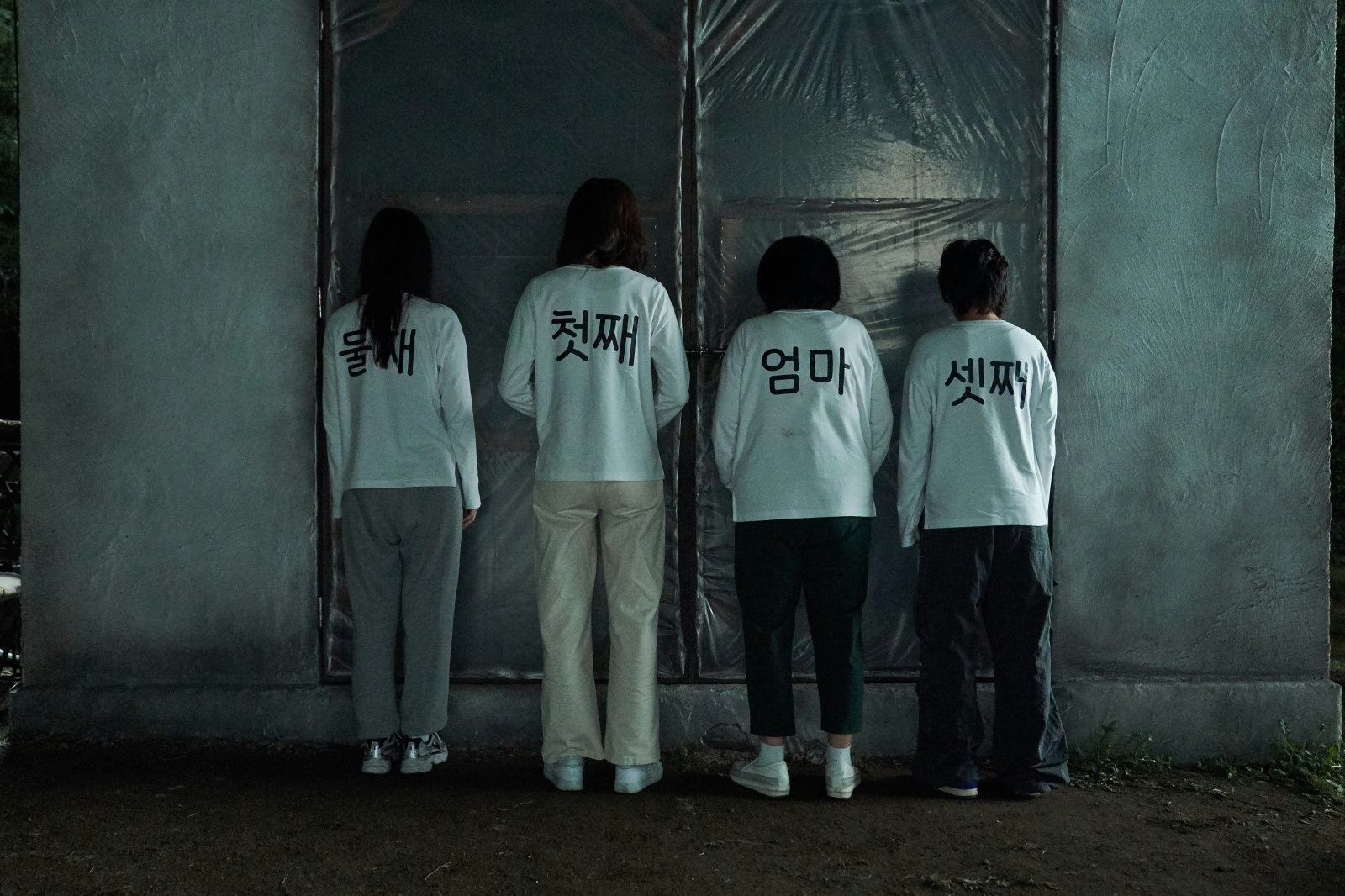
The newly released promotional stills reveal a fascinating contrast between what appears to be a lighthearted family vacation and the ominous undertones lurking beneath. One particularly striking image shows the family standing in matching T-shirts labeled with their family roles—"Mom," "First Daughter," "Second Daughter," and "Third Daughter." This uniformity, rather than appearing cheerful, creates an unsettling atmosphere that suggests coordinated intent.
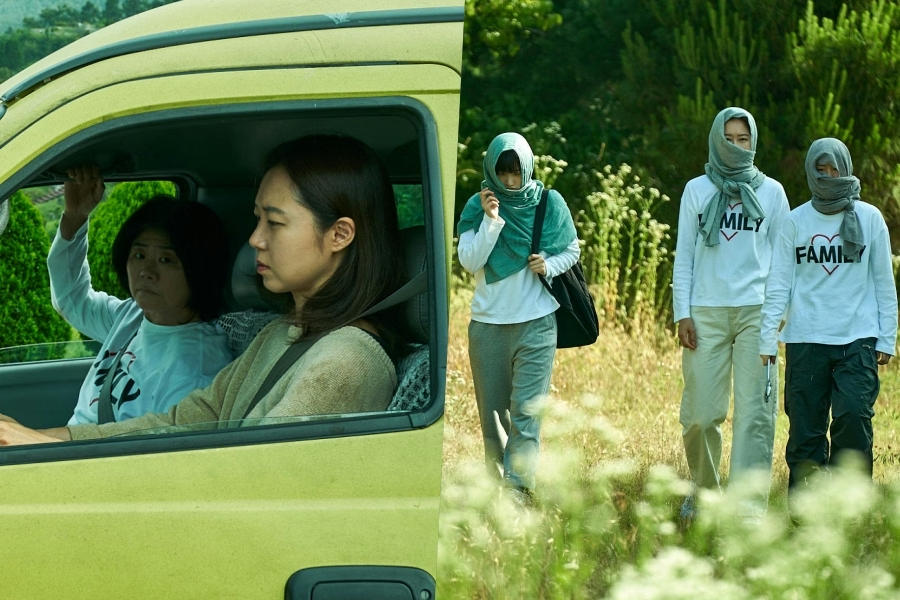
The choice of transportation further emphasizes the film's tonal complexity. The family travels in a weathered yellow van held together with duct tape, suggesting both the worn-down state of their emotional journey and their determination to persevere despite limited resources. The grim expressions on the faces of Ok Sil (portrayed by Lee Jung Eun) and Jang Ju (played by Kong Hyo Jin) as they navigate mountainous terrain immediately signal that this journey carries weight far beyond typical tourist destinations.
The Ritualistic Elements of Grief 🕯️
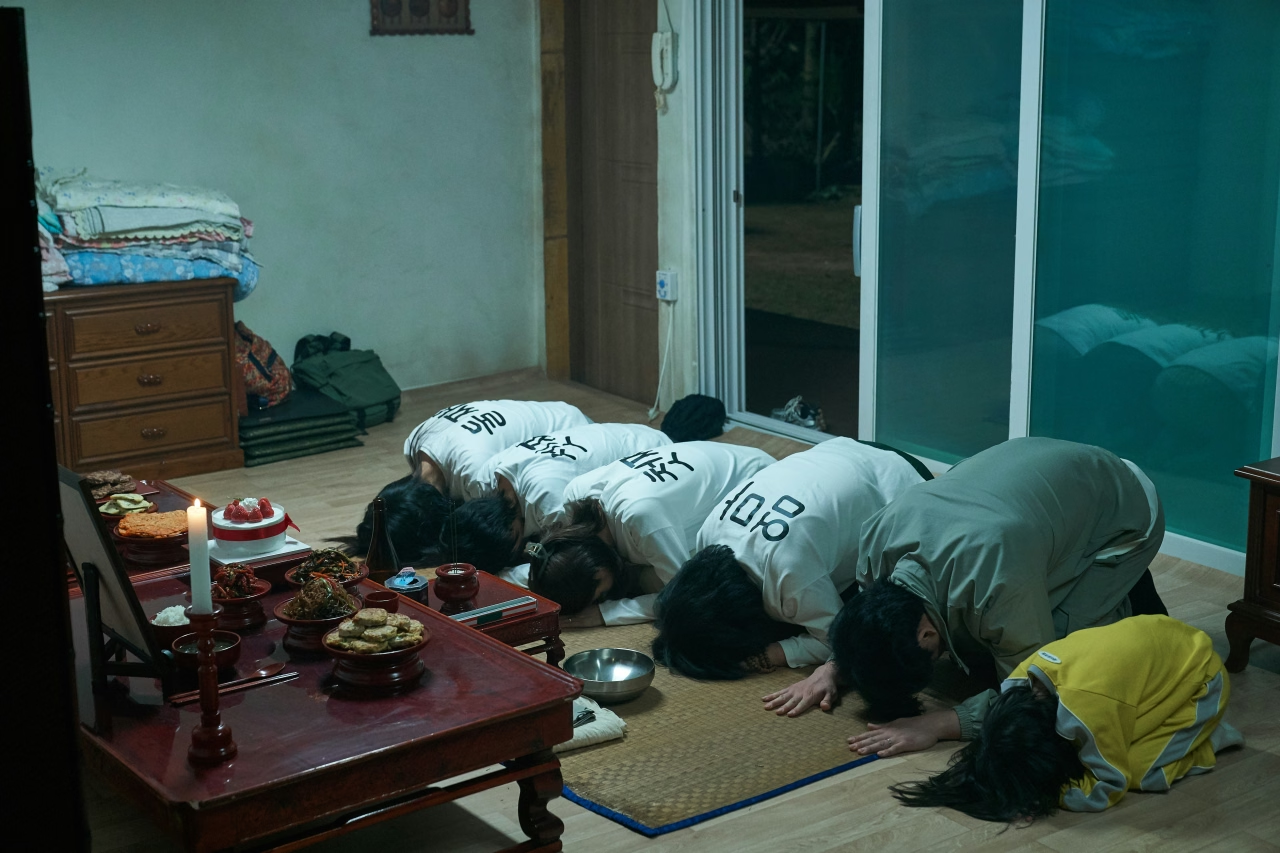
One of the most haunting images from the promotional materials shows the family kneeling before a memorial table set up in their accommodation. The table is complete with a cake—a surreal juxtaposition that merges celebration with mourning. This scene encapsulates the film's central theme: how families process grief through ritual and remembrance, even when that grief has curdled into something darker.
This imagery resonates with traditional Korean funeral and memorial practices, where families gather to honor the deceased. However, the placement of this memorial within a vacation setting creates cognitive dissonance that perfectly captures the film's genre-blending approach. It's neither purely a vacation film nor purely a memorial drama—it exists in the unsettling space between the two.
The Escalation of Mystery 🎭
As the promotional stills progress, the tone becomes increasingly urgent. One image captures Young Ju (Park So Dam) and Dong Ju (Lee Yeon) walking through dense bushes with their faces wrapped tightly in scarves, clearly attempting to conceal their identities. This deliberate concealment raises critical questions about what the family plans to do upon reaching their destination and who they might be trying to avoid.
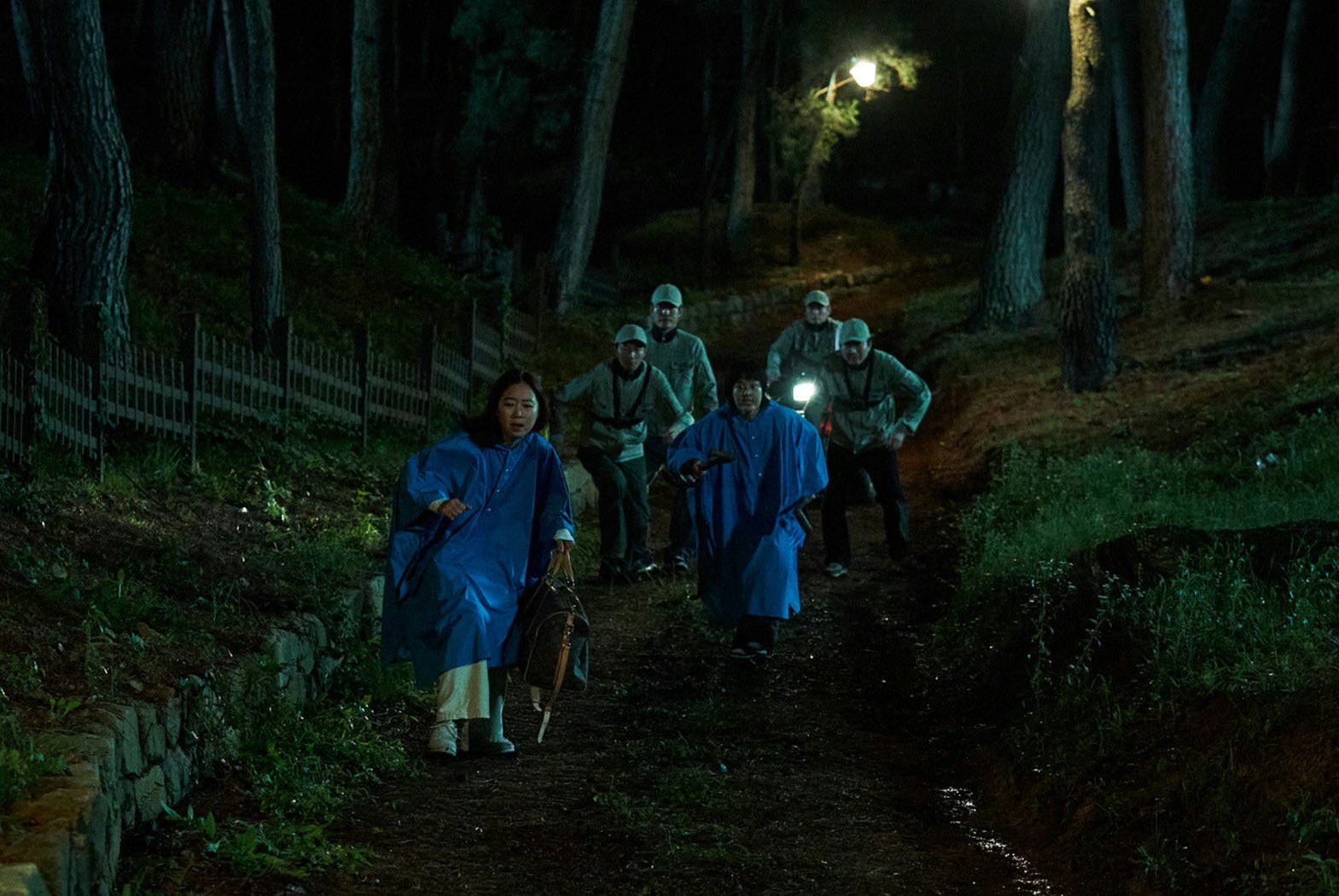
The final still pushes the narrative into overt thriller territory: Jang Ju and Dong Ju are shown sprinting through mountains at night, dressed in blue raincoats and clutching bags while being pursued by a group carrying flashlights. This scene transforms the film from a contemplative family drama into an active chase narrative, suggesting that the family's journey will culminate in confrontation and danger.
The Cast and Their Performances 🌟
Lee Jung Eun brings her considerable talent to the role of Ok Sil, the mother whose determination and grief drive the entire narrative forward. Known for her nuanced performances in both television and film, Lee Jung Eun is perfectly suited to portray a woman balancing maternal love with darker impulses. Her ability to convey complex emotions through subtle facial expressions will be crucial in making audiences understand the psychological journey of a mother seeking answers.
Kong Hyo Jin, playing Jang Ju, carries the film's emotional weight alongside Lee Jung Eun. Her filmography demonstrates her versatility across genres, and her presence in "The Journey to Gyeongju" suggests a character who serves as both emotional anchor and active participant in the family's mission. The chemistry between these two actresses will be instrumental in selling the family dynamics that underpin the narrative.
Park So Dam and Lee Yeon round out the ensemble as Young Ju and Dong Ju, the other sisters whose perspectives and motivations will add layers to the family's collective revenge plot. The intergenerational dynamics between the mother and her adult daughters promise to explore how trauma manifests differently across age groups.

Genre Blending in Contemporary Korean Cinema 🎪
"The Journey to Gyeongju" exemplifies a broader trend in Korean filmmaking: the deliberate blending of genres to create more complex, engaging narratives. Rather than adhering strictly to the conventions of family drama, revenge thriller, or mystery film, contemporary Korean directors are increasingly comfortable working across multiple genres within a single work.
This approach reflects the sophistication of modern audiences who appreciate narrative complexity and thematic depth. The film's marketing strategy—revealing glimpses of the family's bizarre behavior without explaining the underlying motivations—demonstrates how Korean cinema has mastered the art of building anticipation and intrigue. Each promotional image poses questions that demand answers, compelling viewers to seek out the film.
The Gyeongju Setting: More Than Just Location 🏛️
The choice of Gyeongju as both the destination and the film's title carries significance beyond mere geography. Gyeongju is a historically rich city known for its ancient temples, traditional architecture, and cultural heritage. This setting provides a backdrop that contrasts with the film's darker narrative—the juxtaposition of a place associated with history, spirituality, and beauty against a story of grief, mystery, and potential violence creates thematic resonance.
The location choice also suggests that the family's journey may involve confronting historical injustice or uncovering truths that have been buried or forgotten, much like the historical layers that Gyeongju itself represents.
What the Promotional Materials Reveal About the Narrative Structure 📊
Analyzing the sequence of promotional stills provides insight into the film's narrative arc. The progression moves from the mundane (the family in matching shirts) to the increasingly suspicious (wrapped faces, concealment) to the overtly dangerous (nighttime pursuit). This visual progression mirrors what audiences can expect from the narrative structure itself: a gradual escalation from mystery to action.
The film appears to operate on a principle of revelation—each scene peels back another layer of the family's true intentions. What begins as an ambiguous family vacation gradually reveals itself to be something far more calculated and purposeful. This structure creates narrative momentum that will keep audiences invested throughout the runtime.
The Broader Context of Revenge Narratives in Korean Cinema 🎬
Korean cinema has long been fascinated by revenge narratives, from classics like "Oldboy" to contemporary works like "Midnight Runners." However, "The Journey to Gyeongju" distinguishes itself by centering the revenge plot within a family unit rather than focusing on an individual protagonist. This approach allows the film to explore how collective trauma and shared loss can motivate group action.
The family-centered revenge narrative also allows for more nuanced exploration of morality. Individual revenge stories can more easily present clear heroes and villains, but family revenge dramas must contend with the moral complexity of multiple perspectives and competing motivations. Each family member may have different reasons for participating in this journey, different levels of commitment, and different ethical boundaries.
Anticipation Building and Marketing Strategy 🎯
The strategic release of promotional stills demonstrates how Korean film marketing has evolved. Rather than providing straightforward plot summaries or traditional trailers, the marketing campaign relies on intriguing imagery that raises questions without providing answers. This approach respects audience intelligence and generates organic discussion and speculation.
The mysterious nature of the promotional materials has already sparked curiosity among film enthusiasts and industry observers. By withholding crucial plot information, the marketing campaign ensures that audiences will be drawn to theaters seeking answers to the mysteries posed by these images.
The Emotional Core Beneath the Thriller Elements 💔
Beneath all the thriller elements and mysterious imagery lies a fundamentally human story about grief, loss, and the lengths families will go to seek justice or closure. The eight-year gap since Gyeong Ju's disappearance suggests that the family has been living with unresolved trauma for nearly a decade. This prolonged suffering likely explains their willingness to undertake this dangerous journey.
The film appears to explore profound questions about justice, closure, and whether seeking revenge can provide the healing that families desperately need. These thematic elements elevate "The Journey to Gyeongju" beyond a simple thriller into territory that examines the psychological and emotional dimensions of loss.
What Audiences Can Expect 🎪
Based on the promotional materials and the film's premise, audiences can anticipate:
- A complex family dynamic where each member brings their own motivations and perspectives to the journey
- Escalating tension that builds from mystery to action across the narrative
- Strong performances from a talented ensemble cast exploring deep emotional material
- Genre-blending storytelling that combines family drama, mystery, and thriller elements
- Thematic depth examining grief, justice, and the nature of family bonds
- Visual storytelling that uses setting, costume, and imagery to convey meaning
Looking Forward to August 26 🗓️
"The Journey to Gyeongju" arrives in Korean theaters on August 26, arriving at a time when audiences are hungry for substantive, character-driven narratives that challenge conventional storytelling. The film's unique premise, talented cast, and intriguing marketing campaign position it as a must-watch for fans of Korean cinema and thriller enthusiasts.
The promotional materials suggest that this journey will be anything but ordinary. What begins as a family vacation to a historically significant city transforms into something far more dangerous and purposeful. As audiences embark on this journey alongside Ok Sil, Jang Ju, Young Ju, and Dong Ju, they'll discover that sometimes the most important destinations aren't found on maps—they're found in the quest for truth, justice, and closure.
The mystery of what happened to Gyeong Ju, the true nature of this family's mission, and the consequences of their actions await discovery when "The Journey to Gyeongju" opens to the public. This is a film that promises to challenge, intrigue, and emotionally engage audiences in ways that will linger long after the credits roll.
You May Also Like

K-Drama
The Affair Was Just The Beginning: Explosive Drama Unfolds
September 2, 2026
K-Drama
Ryu Jun Yeol's Fingernail Becomes Identity Theft Key in Mousetrap
September 2, 2026
K-Drama
Lee Jung Eun & Kim Moo Yul Lead Star-Studded Revenge Drama Cast
September 2, 2026
K-Drama
The Scandal K-Drama: Son Ye Jin, Ji Chang Wook, Nana
September 2, 2026